
Small-Load vs Standard Concrete Delivery: Which Is Right for Your Project?
June 12, 2026
Selecting the right delivery method is an important part of any concreting project. Whether the work involves a small backyard slab, repair work, footings or a large structural pour, choosing between small-load and standard concrete delivery can influence the cost, timing and practicality of the job. Working with an experienced concrete supplier in Newcastle, such as Maitland Ready Mixed Concrete, can help ensure the delivery option is suited to the required volume, site access and planned placement method.
This article explains the differences between small-load and standard concrete delivery, the types of projects each option may suit, how to estimate the required concrete volume and the factors to consider before booking. Understanding these practical details can help homeowners, builders and contractors choose an appropriate delivery method and reduce the risk of delays on the day of the pour.
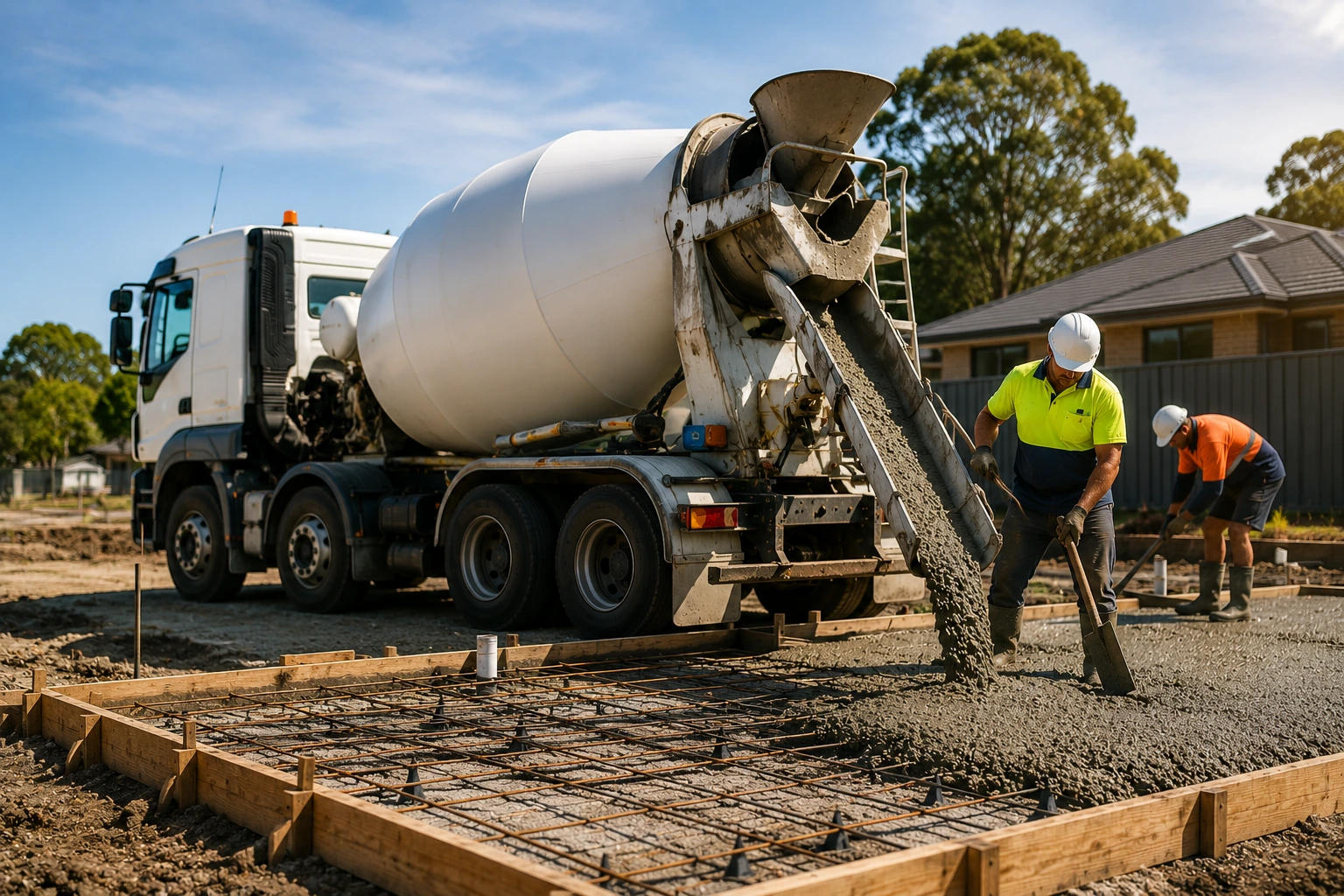
Small-load and standard concrete deliveries differ mainly in the quantity supplied, the type of vehicle used, the site access required and the way the delivery is scheduled and priced.
In simple terms, small-load delivery is intended for minor pours or sites where a full-size agitator truck may not be practical. Standard delivery is generally better suited to larger continuous pours where a higher volume is required and the site can safely accommodate a larger vehicle.
The correct option is not determined by volume alone. Access conditions, the distance between the truck and the pour area, the number of workers available and the rate at which the concrete can be placed should also be considered.
Standard concrete delivery commonly involves larger ready-mix agitator trucks. It is generally suitable for projects that require several cubic metres of concrete or a coordinated sequence of deliveries, such as:
Small-load delivery focuses on reduced quantities and is often more practical for projects such as:
A smaller delivery can help avoid ordering more concrete than the project requires simply to suit a larger truck. However, the most appropriate option depends on the supplier’s available vehicles, the actual volume needed and the site conditions.
Standard delivery generally uses full-size agitator trucks. These vehicles require suitable road access, stable ground and enough room to enter, position and exit the site safely. They are often a practical choice for open sites, new builds, larger renovations and commercial premises.
Small-load services may use more compact trucks with shorter wheelbases. Depending on the supplier’s fleet, a smaller vehicle may be easier to manoeuvre through:
Getting the truck closer to the work area can reduce the distance concrete needs to be moved by wheelbarrow or pump. This can save labour and make a smaller pour easier to manage.
A compact truck should not automatically be assumed to have safe access. Soft soil, steep slopes, wet grass, recently backfilled trenches and underground services can still make it unsafe for any loaded concrete truck to enter the site.
Standard concrete delivery is often more economical per cubic metre for larger pours because the available truck capacity is used efficiently. However, minimum order quantities, part-load fees, delivery charges and waiting-time charges can vary between suppliers. Ordering a small quantity in a full-size truck may make a minor job disproportionately expensive.
Small-load delivery can be a more practical option where only a limited volume is required. The pricing structure will depend on the supplier, delivery distance, truck type and quantity ordered. It is worth requesting a quote for the specific project rather than assuming one delivery method will always be cheaper.
Scheduling requirements can also vary. Standard deliveries are commonly coordinated for continuous pours, with multiple trucks arriving in sequence where required. A small-load delivery may suit a shorter or staged job, subject to the supplier’s availability and the time needed to place and finish the concrete safely.
Small-load and standard deliveries may be available with a range of concrete strengths and mix options. The correct specification depends on the purpose of the concrete, the placement method and any structural or exposure requirements.
Standard delivery is often suitable for larger continuous pours because the concrete can be supplied in a planned sequence. This helps reduce delays that could contribute to inconsistent finishing or unintended cold joints.
Small-load deliveries may suit projects completed in separate stages, particularly where the work involves distinct paths, pads, footings or slabs. Where one section will meet concrete that has already hardened, the joint should be planned carefully. A construction joint may need to be positioned and detailed to suit the project requirements.
For structural work, the location and design of joints should follow the project plans, engineering documentation or relevant professional advice. Delivery convenience should not be the only factor considered.
Small-load concrete delivery is intended for projects where a full-size agitator truck may not be practical or economical. It can be useful where the required volume is limited, access is restricted or the concrete needs to be placed in manageable quantities.
Choosing a smaller delivery can help reduce waste and make the pour easier to coordinate. However, the appropriate quantity and vehicle type should still be confirmed with the supplier before booking.
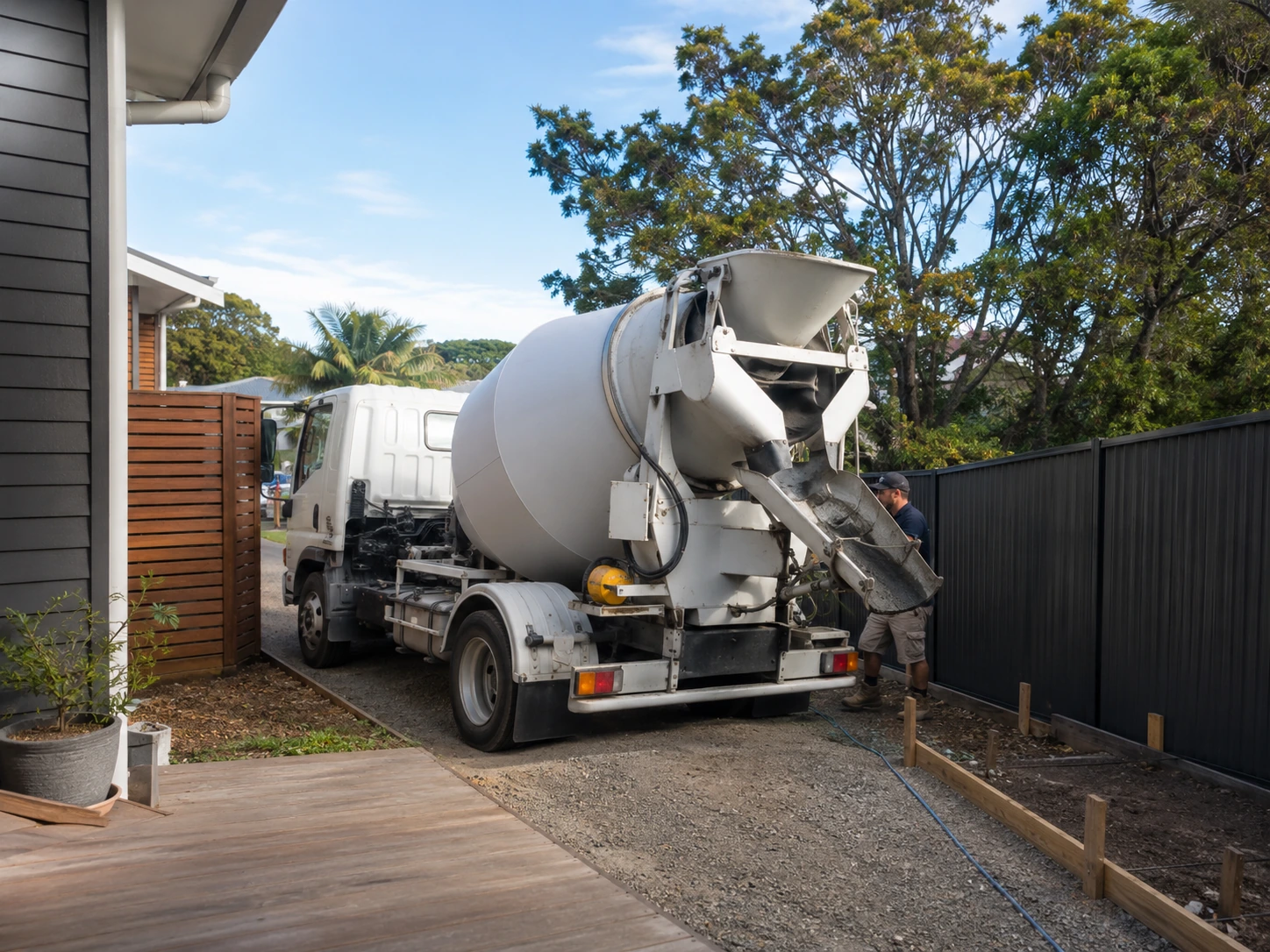
Small-load trucks are often shorter and easier to manoeuvre than larger agitators. This can make them suitable where:
A smaller vehicle may be able to position closer to the pour area, reducing wheelbarrow distances and labour. This can be particularly useful for backyard projects and minor works around existing homes.
Ground conditions still need to be checked carefully. A smaller truck may reduce the load placed on the surface, but it may not be safe to drive across soft soil, wet ground, paving, residential driveways or areas containing underground services. Where safe access is uncertain, a concrete pump or another placement method may be more appropriate.
Many residential and light commercial projects do not require enough concrete to justify a larger delivery. Small-load concrete may be suitable for:
Small-load delivery may also be useful where a project involves separate areas completed at different times. For example, a garden path and a small equipment pad may not need to be poured on the same day.
Where staged work involves adjoining sections of concrete, any required joints should be considered before the pour begins. This is especially important where the finished surface needs to perform as one connected structure.
The delivery volume should suit the number of workers available and the method used to move the concrete into place. A small crew using wheelbarrows will generally place concrete more slowly than an experienced team using a pump.
If too much concrete arrives at once, the crew may struggle to discharge, place, compact and finish it before it begins to stiffen. This can lead to rushed work, poor finishing and avoidable delays.
A smaller quantity may be easier to manage where labour is limited. The supplier should be told how the concrete will be moved from the truck to the forms so the delivery can be planned realistically.
Small-load delivery may also suit jobs that need to be completed within a restricted window. This may include projects affected by:
A smaller pour can sometimes be easier to complete before conditions change. However, the weather should still be assessed carefully before work begins. Concrete should not be ordered simply because a short break in poor weather appears likely.
Standard concrete delivery is typically better suited to medium and large projects where volume, consistency and coordinated placement are important.
It can be the more efficient option where the site can safely accommodate a larger truck and the crew has the equipment and labour required to place the concrete at an appropriate rate.
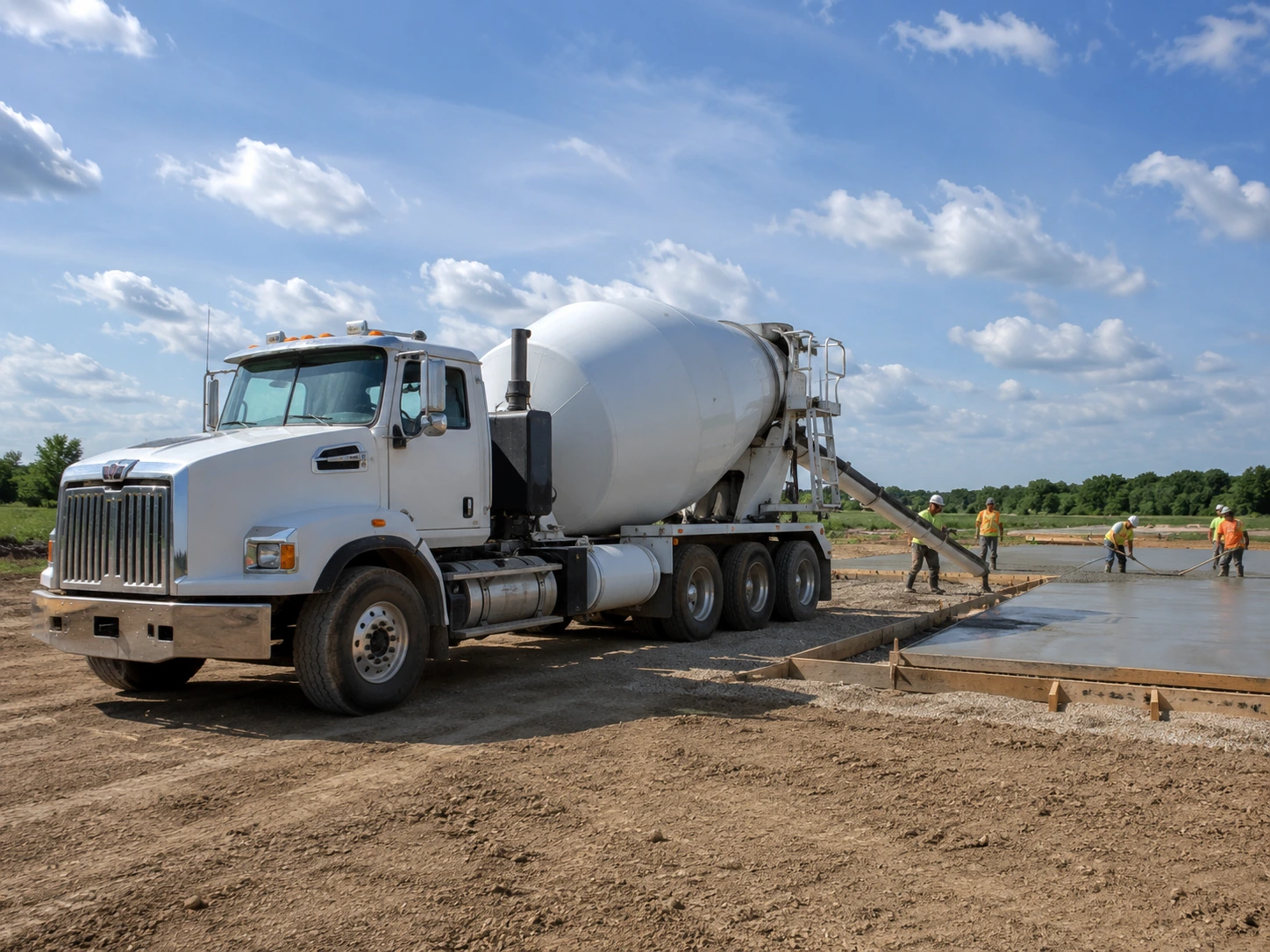
Standard delivery is commonly used for projects such as:
These jobs may require a full truck or multiple trucks delivered in sequence. Coordinated delivery helps keep the pour moving and reduces the risk of long gaps between loads.
Structural projects require more than a volume estimate. The concrete strength, slump, exposure classification and any special mix requirements may need to follow the plans or engineering documentation. The supplier should be given the relevant project details when the order is placed.
Standard delivery is often the stronger choice where the concrete needs to be placed continuously. This may include:
A coordinated schedule helps limit downtime and keep the concrete within a workable condition while it is placed and finished.
The delivery schedule should still be realistic. Ordering trucks too close together can create waiting-time issues if the crew cannot place the concrete quickly enough. Leaving large gaps between trucks can create a different problem if part of the pour begins to stiffen before the next load arrives.
Standard delivery is generally more practical where the site can safely accommodate a full-size agitator truck. This includes sites with:
On a well-prepared site, standard delivery can reduce manual handling and help keep the pour within the planned work area.
Choosing between small-load and standard concrete delivery starts with an accurate volume estimate. Ordering too little concrete can disrupt the pour and contribute to delays or unwanted joints. Ordering significantly more than needed can increase waste and disposal requirements.
Concrete is measured in cubic metres. The calculation will depend on the shape of the area being poured.
For a rectangular slab, calculate the required volume by multiplying the length, width and depth in metres:
Volume = length × width × depth
For example, a slab measuring 5 metres long, 4 metres wide and 0.1 metres deep requires:
5 × 4 × 0.1 = 2 m³
The calculated volume should be checked against the actual site conditions before the order is placed.
For footings, paths with changing widths or irregularly shaped slabs, divide the project into smaller sections and calculate each area separately. Add the individual results together to estimate the overall requirement.
For more guidance before placing an order, these tips for accurate concrete ready-mix estimation explain some of the factors that can affect the quantity and mix required.
Real sites are rarely perfectly uniform. The actual quantity required may be affected by:
A reasonable allowance should be included to reduce the risk of running short. The appropriate amount depends on the project and placement method.
For a straightforward, well-prepared slab, a smaller allowance may be sufficient. More complex shapes, uneven ground, thickened edges or pump placement may require a larger margin. The final quantity should be discussed with the supplier or relevant contractor before booking.
There is no single volume threshold that applies to every project. A small-load service may be appropriate for minor paths, pads, footings and repair work, while a larger continuous pour may suit a standard agitator truck or a sequence of deliveries.
The most practical choice depends on:
A project requiring a moderate quantity may still benefit from a smaller truck if access is restricted. Conversely, a rear slab requiring pumped concrete may be more efficiently supplied using a standard delivery if the truck can remain safely positioned on the street.
Site access often determines which delivery method is realistic. The physical constraints of the property, the route taken by the truck and the distance between the discharge point and the forms can influence the vehicle size, placement method and timing.
Assessing these conditions before booking helps reduce the risk of delays, additional charges or a delivery that cannot be completed safely. It is also worth reviewing how to prepare your site for ready-mixed concrete delivery before confirming the truck size and delivery time.
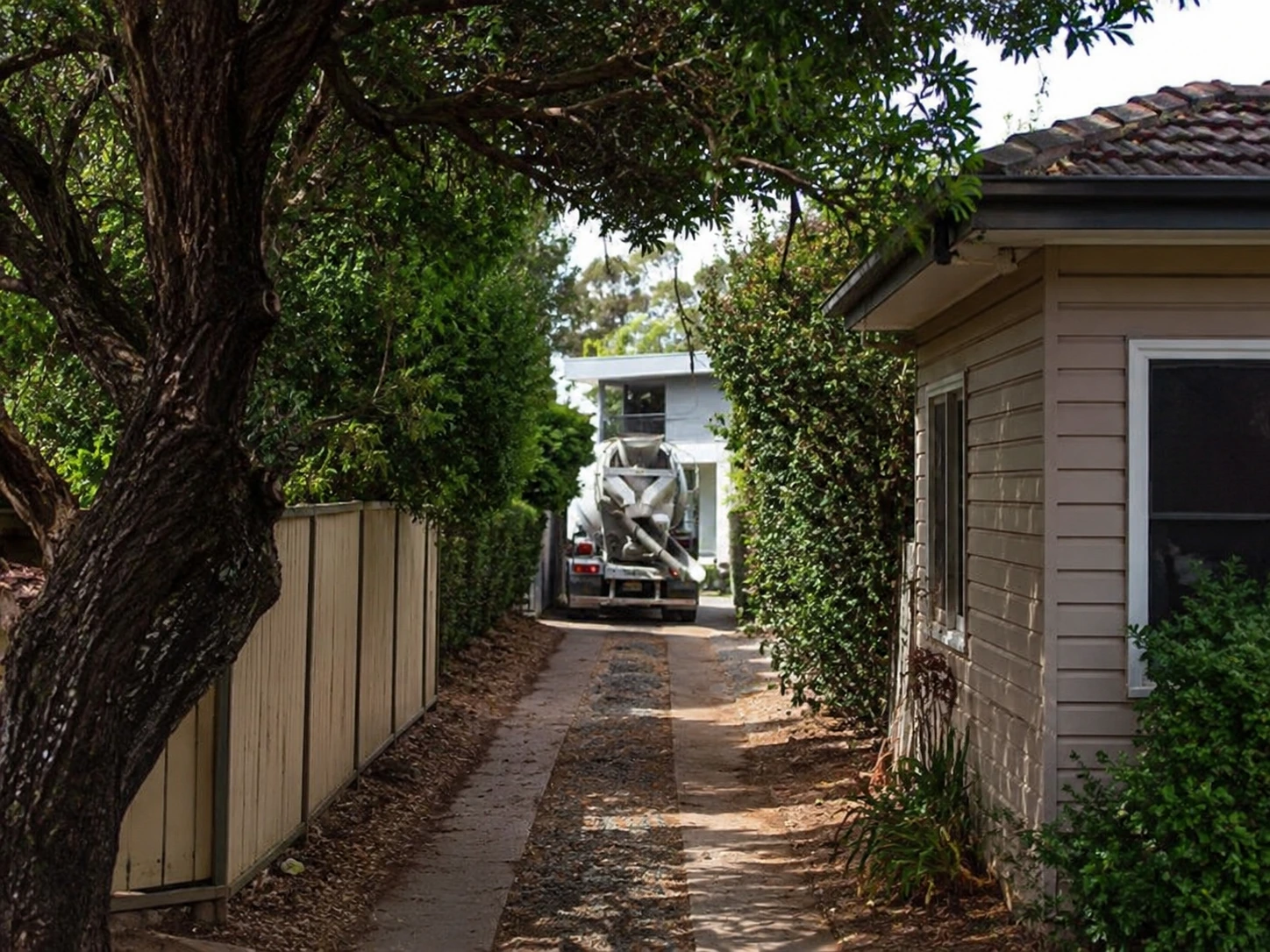
Standard ready-mix trucks require suitable access along public roads and into the property. Possible restrictions include:
A smaller truck may be more manoeuvrable, but the dimensions and capabilities of individual vehicles vary. The supplier should be given clear information about the site so the most suitable option can be scheduled.
Before booking, measure gate openings, driveway widths and overhead clearance. Photos, measurements or a basic sketch of the access route can help identify potential issues before the truck arrives.
A fully loaded concrete truck is heavy. Firm, stable ground is essential.
Access may not be suitable where the route includes:
Where excavation or truck access may affect underground infrastructure, request plans through Before You Dig Australia and follow the relevant asset-owner guidance before work begins.
A smaller vehicle may reduce some pressure on the surface, but it does not remove the need for a proper assessment. If the truck cannot safely approach the pour, concrete may need to be transferred using wheelbarrows, a line pump or a boom pump.
The distance from the truck to the work area affects labour, placement time and the most appropriate unloading method.
A short wheelbarrow run may be practical for a small pour. Longer distances can slow the process considerably, especially in warm weather or where the route includes steps, slopes or narrow side access.
Pumping may be more suitable where:
The planned placement method should be discussed before ordering because it may affect the required mix and delivery schedule.
Residential and urban projects may also be affected by practical restrictions outside the property. Consider whether:
These details should be identified early. A smaller truck may reduce disruption in some situations, while a planned standard delivery may be more efficient where a larger pour needs to be completed within a limited window.
A smooth pour depends on preparation before the truck arrives. Confirming the required volume, mix, access route, crew capacity and weather conditions makes it easier to choose the appropriate delivery method.
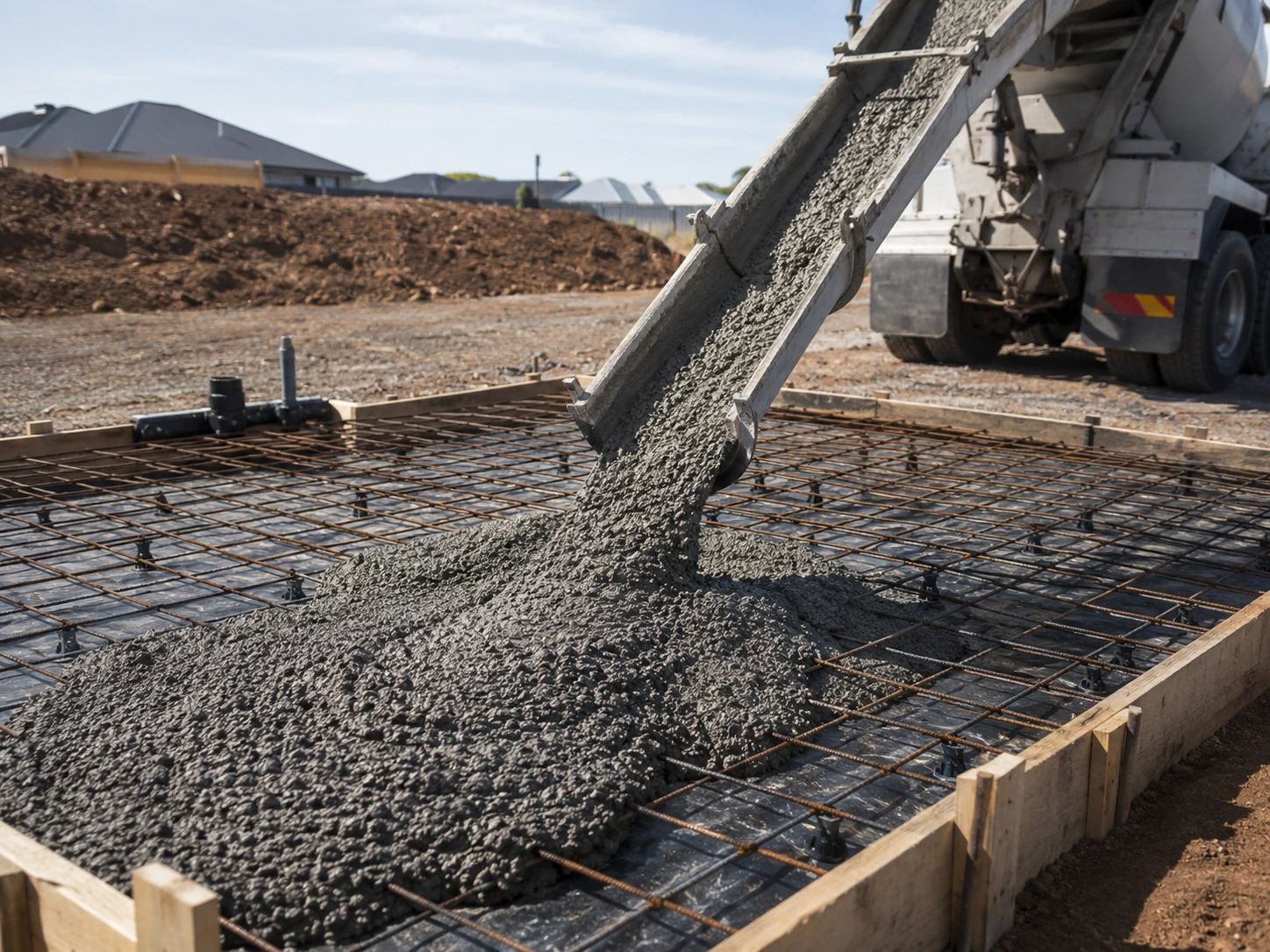
Measure the project carefully and calculate the required volume in cubic metres. Include an appropriate allowance for site variations and discuss the final quantity with the supplier.
The correct mix should also be confirmed. Depending on the project, this may include:
For house slabs, structural footings and other engineered work, use the plans or engineering documentation rather than selecting a mix based on a general rule.
Advise the supplier whether the concrete will be:
The placement method affects how quickly the concrete can be unloaded and whether the delivery schedule is realistic.
A small crew wheelbarrowing concrete to a rear yard may need a different approach from a team using a pump for a large slab.
Measure and assess:
Consider whether the truck can position safely without damaging surfaces or blocking access. Where reversing could create a safety issue, discuss the site layout with the supplier before booking.
Before the truck arrives, ensure:
The washout area should also be planned carefully. The NSW EPA provides guidance on the appropriate collection, treatment and disposal of concrete waste.
Delays after the concrete arrives can affect workability and may lead to waiting-time charges.
Weather conditions can affect placement, finishing and curing. Hot, dry or windy weather can cause the surface to lose moisture quickly, while rain can interfere with finishing and damage freshly placed concrete.
Check the local forecast before confirming the delivery and reassess conditions closer to the pour. Where weather is likely to create a problem, discuss whether the work should be rescheduled or whether additional planning measures are required.
Choosing between small-load and standard concrete delivery requires more than comparing quantities. The right option depends on the required volume, truck access, placement method, crew capacity, project specifications and available working time.
Small-load delivery can be practical for restricted sites, minor pours and projects where a more manageable quantity is required. Standard delivery is generally better suited to larger continuous pours where the site, labour and equipment can support a higher volume and coordinated schedule.
Assessing the project carefully before booking helps reduce the risk of delays, additional charges, material shortages and avoidable problems on the day of the pour. Maitland Ready Mixed Concrete can discuss the delivery requirements and help determine which option is suited to the work.
Call our friendly and highly experienced team today to get your concrete, sand, aggregate, and landscaping products.
-1.png)

