
What Base Material Should You Use Under Pavers?
February 17, 2026
Choosing the right base material under pavers is one of the most important decisions in any landscaping or paving project. The base determines whether the surface stays level, drains properly and performs reliably without movement or cracking over time. For homeowners and contractors sourcing landscaping products in Newcastle, understanding how road base, compacted aggregate and bedding sand work together is essential to building a stable and long-lasting foundation.
At Maitland Ready Mixed Concrete, we regularly see how correct base selection and, in some cases, the use of stabilised materials can significantly improve the durability and appearance of driveways, paths, patios and pool surrounds across the region. When the groundwork is done properly, the finished surface not only looks better on day one but continues to perform well for years to come.
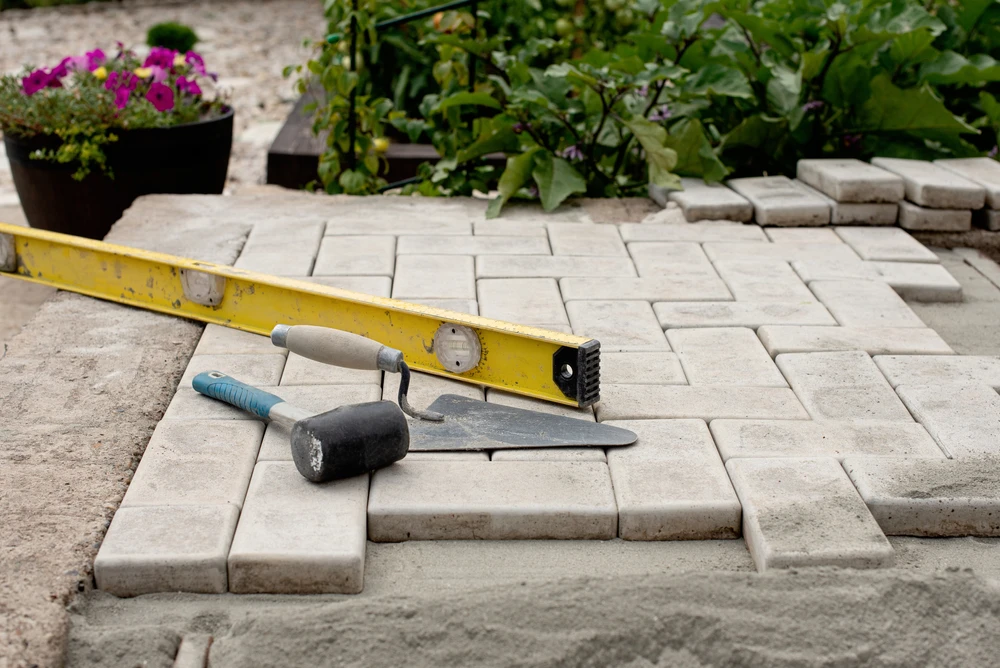
The base material under pavers is what keeps a paved area flat, safe and looking good for years. It is more important than the pavers themselves. If the base is wrong or poorly prepared, the surface can sink, shift or crack, no matter how high-quality the pavers are.
For homeowners and contractors, choosing the right base and installing it correctly is critical for driveways, paths, patios and pool surrounds. Contractors supply materials that are designed to suit local soils and conditions so the paved surface stays stable through heat, rain and daily use.
The base layer spreads the weight of vehicles and foot traffic across the ground below. A compacted granular base, such as crushed concrete or road base, locks together to form a firm platform that resists movement.
For driveways or areas that will take vehicles, a thicker and stronger base is essential. Without it, tyres can create ruts and depressions in soft ground. Over time, this leads to uneven pavers and trip hazards. For paths and patios, the loads are lighter, but a properly compacted base still prevents individual pavers from rocking underfoot.
The right base material also helps bridge soft patches in the subgrade. If the subsoil is clay or reactive ground, a well-designed base layer helps distribute loads, so movement in the natural soil has less effect on the paved surface.
Water is one of the main causes of paving failure. If moisture sits under pavers, it can soften the ground, promote erosion and encourage weed growth. Good base material is chosen and graded so it drains.
Crushed rock or recycled concrete with the correct particle size allows water to move through the base and away from the pavers while still compacting tightly. In many sites, where clay soils hold water, a free-draining base and slight surface fall are vital. If water cannot escape, it can cause pumping of fines when trafficked, leading to sinking and gaps between pavers.
A suitable bedding layer, such as washed sand on top of a stable base, lets excess water pass through the joints then out into the base below. Experts can recommend base and bedding products that work together with local soil conditions to manage runoff rather than trap it.
A well-built base directly affects how long a paved surface will last. When the base is stable, pavers stay level, so jointing sand stays in place and edges do not spread. This reduces ongoing maintenance and the need for lifting and relaying sections.
Visually, a sound base keeps patterns straight and joint lines tight. There are fewer issues with lips between pavers that can catch shoes or cause drainage problems. Over several seasons, the difference between a properly prepared base and a minimal one becomes obvious in the amount of movement, weeds and surface repair needed.
By investing in the correct base material and compaction at the start, property owners gain a paved surface that performs well and maintains its appearance with only simple cleaning and occasional re-sanding rather than costly repairs.
Choosing between road base and crusher dust is one of the most important decisions when preparing a paver base. Both are readily available, yet they behave differently under load and over time. The right choice depends on how the paved area will be used, the soil conditions on site and the finish required.
In general, road base is better for strength and long-term stability under driveways and high-traffic areas. Crusher dust is typically used as a levelling or bedding layer over the top of a stronger base or for very light use paths where loads are minimal and drainage is good.
Crusher dust, also called crusher fines or stone dust, is a very fine crushed material with particles mostly below 5 mm. It compacts smoothly and gives a neat level surface, which is why many installers like it as a bedding layer directly under pavers.
Road base is usually the best choice when:
For most residential driveways, a compacted road base layer of 100 to 150 mm is typical on firm ground, with deeper sections on weaker soils. Technicians can advise on thickness for specific site conditions.
Crusher dust also called crusher fines or stone dust is a very fine crushed material with particles mostly below 5 mm. It compacts smoothly and gives a neat level surface which is why many installers like it as a bedding layer directly under pavers.
Crusher dust works well when:
On its own, crusher dust does not have the same bearing strength as road base, especially over poor soils. If it gets saturated, it can pump or shift, which may lead to paver movement. For this reason, Maitland Ready Mixed Concrete generally recommends crusher dust as a topping or bedding material rather than the main structural base for driveways or heavily loaded areas.
In many quality installations, both materials are used together. A common approach is:
For light garden paths on firm, well-drained ground, the base may be crusher dust only at around 50 to 75 mm compacted.
Ground conditions under a paving area determine how thick the base should be, which materials are suitable and whether extra stabilisation is required. If the soil is weak or holds water, the best base material in the world will still move or sink eventually. Contractors assess the existing ground first, then recommend a base that matches local site conditions.
Understanding how soil type, drainage and load affect base choice helps homeowners and contractors avoid common problems, such as rutting, rocking pavers or ponding water. The right base for a light garden path on firm ground is very different from what is needed under a driveway on soft clay.
The natural soil provides the foundation for the whole paving system. Sandy or loamy soils behave very differently from reactive clays found in many suburbs.
On firm granular soils such as sand or decomposed granite, the ground already drains reasonably well and compacts tightly. Here, a standard crushed aggregate base may be suitable with moderate thickness because the subgrade is not highly reactive. The focus is on achieving good compaction and a smooth, level surface for the bedding layer.
On clay or reactive soils, the ground can swell when wet and shrink when dry, creating movement under pavers. Clay also holds water, which weakens the base. In these conditions, engineers recommend a thicker base of well-graded crushed rock, sometimes in two layers with additional compaction. On very soft or pumping clays, it may be sensible to stabilise the subgrade with a thin layer of stabilised sand or lean concrete to create a firm working platform before placing the main base.
If the existing soil is fill or contains organic material such as roots or topsoil, it should be removed and replaced with suitable compactable material. Any soft spots need to be dug out and rebuilt, or they will show up later as low points in the pavement.
Water is one of the main causes of base failure. If the paving area stays wet after rain or sits at the bottom of a slope, the base and subgrade will soften over time. In these locations, the choice of base material and drainage details is critical.
Free-draining aggregates, such as crushed rock with minimal fines, perform better where moisture is an issue because water can move through the base instead of sitting in it. A slight crossfall in the subgrade and base helps direct water away from the paved area. On heavier clay sites, a geotextile separator between soil and base can prevent fines from pumping into the base and clogging it.
How the area will be used also interacts with ground conditions to guide base choice. A footpath or patio on firm soil might only need a modest base thickness. The same soil under a driveway or parking bay for utes or delivery vehicles will require a thicker, stronger base to spread wheel loads.
Where soft soils combine with heavy loads, professionals will specify:
In some cases, a concrete base slab may be the best solution under segmental pavers, particularly for commercial or high-traffic areas on poor ground. This creates a platform that is less influenced by seasonal soil movement and provides long-term stability.
Getting the base thickness and compaction right is what stops pavers from sinking, rocking or spreading. The correct build-up depends on soil conditions, traffic loads and the type of paver, but the principles are the same for most projects. A properly compacted base creates a firm, even platform that drains well and supports the pavers through wet and dry seasons.
Maitland Ready Mixed Concrete recommends planning base depth and compaction before any excavation begins. This helps ensure finished levels come out at the correct height relative to doors, paths and drainage points.
For most residential projects using a crushed rock or road base under pavers, the following compacted thicknesses are a practical guide:
These figures refer to the compacted thickness, not the loose depth before compaction. As a rule, loose material will compact by 20 to 30%. For example, to achieve a 100 mm compacted base, the installer will typically place about 130 mm of loose material and then compact it.
Compaction is most effective when the base is placed in thin layers rather than one deep fill. Each layer or lift should be spread evenly and then compacted before the next is added.
For residential work:
Where level changes are significant, it is best to bench or step cuts into slopes rather than placing a thick wedge of base on one side. This reduces the risk of the base sliding and helps the pavers stay level.
For small patios or paths, a vibrating plate compactor is usually adequate. Driveways or high-load areas are better served by a heavier plate compactor or small roller, especially over thicker bases or more difficult soils.
The base is compacted until:
Installers commonly compact each lift with at least two to four passes of the machine, overlapping each run. The final compacted base should be trimmed to the correct falls for drainage with a tight, level finish ready for the paver bedding layer.
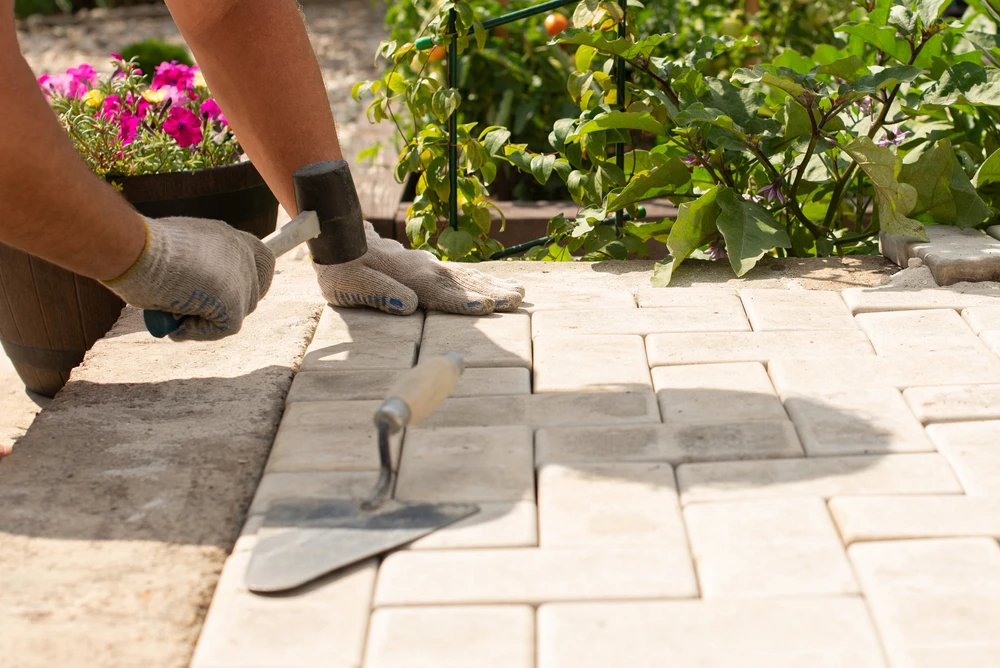
Bedding sand is the final layer that sits directly under the pavers and is essential for achieving a smooth, even surface. It allows the pavers to be adjusted during installation and helps lock them in place once compacted and jointed.
Contractors suggest using bedding sand over a properly prepared base, not as a substitute for it. When selected and installed correctly, bedding sand helps prevent rocking pavers, uneven joints and premature movement.
Bedding sand has two main jobs. First, it creates a uniform level layer so pavers sit at a consistent height. Second, it allows minor adjustment during laying so each paver can be tapped into its final position without cracking.
The sand also fills very small gaps between the base material and the paver underside, which spreads loads more evenly. After the pavers are laid and compacted, some of the jointing sand vibrates down into the bedding layer, helping interlock the system. This is why clean, well-graded sand is important. Poor quality sand with clay, silt or organic material can hold water, lose strength and lead to settlement.
Bedding sand is standard practice for most segmental paving on residential and light commercial projects, including:
In these situations, bedding sand sits over a compacted base such as crushed rock or road base. The sand layer is typically 20 to 30 mm thick after compaction. Thicker layers can lead to rutting and movement, while thinner layers make it difficult to adjust the pavers and may telegraph imperfections from the base through to the surface.
Washed coarse sand or paving sand is usually recommended. It should be free-draining with particle sizes that are neither too fine nor too coarse. Bricklaying sand or washed beach sand is generally too fine and can hold water. On the other hand, very coarse or gravelly sand can make it hard to achieve a smooth screeded surface.
For best results:
By treating bedding sand as part of a complete pavement system, contractors help clients achieve paver surfaces that stay level, drain correctly and perform reliably over time.
Even quality pavers will move, crack or sink if the base beneath them is not designed and installed correctly. Many failures come back to the same avoidable base issues. Understanding these common mistakes helps get longer-lasting driveways, paths and patios.
Most problems relate to either the wrong material, poor compaction or not managing water. By selecting the correct base blend for local ground conditions and installing it properly in layers, the risk of uneven surfaces and costly repairs is greatly reduced.
A frequent error is using whatever crushed rock or road base is cheapest instead of a blend suited to pavers and the site. Materials with too many fines can hold water and become soft in wet weather, while very coarse aggregate can be difficult to compact tightly.
A heavily clay-bound road base can trap moisture and pump under load, leading to rutting under car tyres or dipping around high traffic areas. For pavers, a well-graded crushed rock or stabilised base that compacts firmly but still drains is usually a better choice.
Another mistake is skipping the base entirely and laying pavers straight over existing soil or lawn. Even on firm ground, the natural subgrade will expand and contract with moisture, which quickly translates into lippage and trip hazards in the paved surface.
Even when the right material is chosen, it must be installed at the right depth. Thin bases are one of the main reasons pavers fail under vehicles. For driveways and parking areas, the base usually needs to be deeper than for a garden path, especially on softer subgrades.
Placing the full depth of the base in one thick layer is another issue. Thick layers are very hard to compact right through, so the top may feel hard while the lower section remains loose. As loads are applied, the base settles unevenly and pavers follow. Place the base in thin lifts compacted with a plate compactor between passes so the whole thickness is uniformly dense.
Skipping mechanical compaction altogether and simply “tamping by hand” almost always leads to movement. For any area larger than a small stepping stone path, a powered compactor is essential.
Water is one of the biggest enemies of a paver base. If the base is installed flat with no crossfall, rainwater can pool and soak into the subgrade. Eventually, this softens the ground, and the base begins to move. Every paved area should be laid to a controlled fall, directing water to drains, garden beds or lawns away from buildings.
On reactive clay or areas prone to saturation, a base that does not drain freely will deteriorate more quickly. Not separating the base from soft wet subsoil with a suitable geofabric can also allow fines to migrate upward, which clogs the base and reduces its strength.
Choosing the right base material under pavers isn’t just a technical detail; it’s what determines whether your project still looks great in two years’ time or starts to move, sink and cause you headaches. Throughout this article, key base options were discussed, from compacted road base and crushed rock to bedding sands and stabilised bases. Also, how each one performs under different conditions, such as foot and vehicle traffic, soil types and drainage requirements. Don’t forget about why proper excavation, compaction, moisture control and correct layer thickness are every bit as important as the paver you see on top and how cutting corners at the base will always show up later in the finished surface. By matching the right material to the right application and installing it to specification, you create a stable, well-drained foundation that resists movement, reduces trip hazards and keeps maintenance to a minimum.
Call our friendly and highly experienced team today to get your concrete, sand, aggregate, and landscaping products.
-1.png)

