
What Makes Concrete Strong? Key Factors in Mix Design and Durability
April 7, 2026
When concrete is ordered for a project, it is not simply a matter of buying a grey material that hardens after it is poured. It is an investment in the long-term performance of a structure that must withstand loads, weather, traffic and time. Maitland Ready Mixed Concrete helps highlight that concrete strength is not left to chance. Ready mixed concrete in Newcastle depends on deliberate mix design, quality raw materials, controlled water content, appropriate admixtures and sound placement and curing practices on site.
This article explains what gives concrete its strength from the inside out. It looks at how cement type, aggregate grading, water-cement ratio and reinforcement all contribute to durable concrete for driveways, slabs, footings and structural elements. It also covers how curing methods, exposure conditions and long-term durability factors influence service life. With a solid understanding of these fundamentals, it becomes easier to specify better mixes, avoid preventable problems and achieve concrete that performs as intended.
Concrete strength is determined by a combination of mix design, material quality and construction practices. The balance between cement, water, aggregates and admixtures has a direct effect on compressive strength, durability and long-term performance under load and exposure.
Although cement is the reactive ingredient in the mix, strength does not come from cement content alone. The way the ingredients interact matters far more, particularly the water-cement ratio, the quality and grading of aggregates and the conditions during placement and curing. Strong concrete is the result of a well-proportioned mix that is handled properly from batching through to final curing.
The water-cement ratio is the single most important factor affecting concrete strength. In general, strength increases as the water-cement ratio decreases, provided the mix is still workable enough to place, compact and finish correctly.
Too much water creates a weaker cement paste with more capillary pores. These microscopic voids reduce strength and make the hardened concrete more permeable to water and aggressive substances. For many structural applications, water-cement ratios commonly fall between about 0.40 and 0.55 by weight, depending on the required strength and the exposure conditions.
Too little water also creates problems. While a low ratio can improve strength, an overly dry mix may not compact properly and may prevent full hydration of the cement. In practice, the goal is to use the lowest practical water-cement ratio for the job while maintaining enough workability for proper placement and consolidation. This is often achieved with plasticisers rather than additional water.
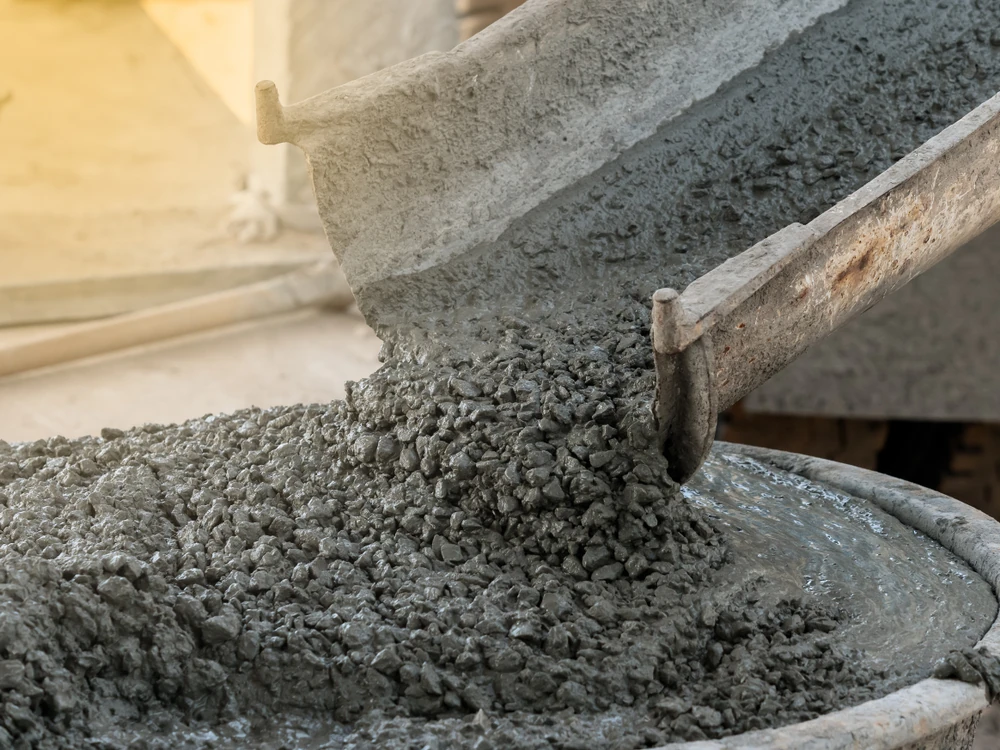
Aggregates make up most of the concrete volume, so their properties have a major effect on strength and durability. Hard, clean and well-graded aggregates help create a dense internal structure that can carry compressive loads efficiently.
Several aggregate characteristics matter. Strength and hardness are important because weak aggregate can become the limiting factor in the mix. Cleanliness is equally critical, as clay, silt and organic matter interfere with the bond between the aggregate and the cement paste. Grading and particle shape also influence performance. A well-graded mix of fine and coarse particles reduces voids, improves packing and lowers the amount of paste needed to fill gaps. Angular particles can improve interlock, although they must be balanced with enough fines to maintain workability.
Poorly graded or contaminated aggregates increase voids, reduce bonding and make the finished concrete weaker and less durable. Good aggregate selection is therefore fundamental, not secondary, to strong concrete.
Even a well-designed concrete mix can underperform if it is not placed and cured correctly. Cement needs moisture and suitable temperatures to hydrate properly and develop strength. If freshly placed concrete dries too quickly, the surface can shrink, crack and form weak zones. Proper curing keeps the concrete moist and helps maintain stable conditions during the early stages of strength development.
For many common applications, curing should continue for at least the first seven days, although longer curing may be beneficial for high-performance or slower-setting mixes. Temperature also matters. Excessive heat can cause rapid moisture loss and uncontrolled setting, while cold conditions can slow hydration and delay strength gain.
Compaction is just as important. Vibration or careful rodding removes entrapped air and reduces internal voids. Air pockets left by poor compaction act as defects within the hardened concrete and can significantly reduce strength. Concrete that is properly compacted and cured will be denser, stronger and more durable over time.
The water-cement ratio deserves close attention because it affects both strength and durability. It is simply the weight of water divided by the weight of cement in the mix, yet even small changes can have a major effect on performance. This ratio influences how strong the concrete becomes, how likely it is to crack and how well it resists weather, traffic and moisture.
Concrete needs water for hydration, but only a portion of that water is consumed by the chemical reaction. Any excess water eventually leaves behind pores as it evaporates. These pores reduce density and create pathways for water and contaminants to enter the concrete later.
Concrete gains strength as the cement hydrates and binds the aggregates into a solid mass. When the water-cement ratio is too high, more pores are left behind in the hardened paste and compressive strength drops.
As a broad guide, ratios around 0.35 to 0.45 can produce high-strength structural concrete when the mix is placed and cured properly. Ratios around 0.50 to 0.55 are common for general slabs and paths where moderate strength and practical workability are needed. Once the ratio rises above about 0.60, the concrete usually becomes much weaker and more permeable, making it more vulnerable to cracking, wear and moisture penetration.
For a given cement and aggregate combination, the water-cement ratio is the main control over 28-day compressive strength. Increasing cement content alone does not make up for excessive water.
The water-cement ratio affects more than strength. A lower ratio reduces the size and connectivity of pores within the concrete, which improves resistance to water penetration, chloride ingress and surface wear. This becomes particularly important in environments where moisture, salts or repeated wetting and drying can shorten service life.
At the same time, a very low ratio can make the mix difficult to place, especially around reinforcement or in detailed formwork. Rather than adding water, it is usually better to improve workability through plasticisers or superplasticisers. These admixtures make the concrete easier to handle without sacrificing the strength and durability benefits of a lower water-cement ratio.
A carefully designed water-cement ratio only delivers results if it is maintained on site. One of the most common causes of weak, dusty or crack-prone concrete is the uncontrolled addition of water to improve slump during placement.
If a mix needs to be more workable, that should be planned in advance through the mix design, not improvised once the truck arrives. Accurate batching, quality control testing and disciplined site practices are all essential to make sure the intended ratio is preserved. When that happens, the finished concrete is far more likely to reach its strength targets and perform well over its service life.
Cement and aggregates do much more than fill space within a mix. Their quality directly affects how strong the concrete becomes, how long it lasts and how well it performs in local conditions such as heat, wetting, drying and traffic loading. Poor-quality materials can undermine an otherwise sound mix design, while well-selected materials provide a reliable base for long-term performance.
Attention to cement type, fineness, consistency and aggregate grading helps reduce cracking, improve strength development and lower maintenance demands. For projects expected to last for decades, material quality is a basic requirement rather than an upgrade.
Cement acts as the binder that holds the concrete together. Its properties affect early strength gain, long-term performance and resistance to deterioration.
General-purpose Portland cement is suitable for many applications, while blended cements containing fly ash or slag can improve workability, lower heat of hydration and increase durability in aggressive environments. Choosing the right cement for the exposure conditions is an important step in preventing premature deterioration.
Fineness also matters. Finer cement particles hydrate more quickly, which can help when early strength is needed. However, excessively fine cement may increase water demand and shrinkage, which can raise the risk of cracking. A balanced cement product supports both practical placement and long-term durability.
Cement and aggregates need to work well together and suit the environment the concrete will face. Some aggregates contain reactive minerals that can trigger alkali-silica reaction, which leads to expansion, cracking and long-term damage. This risk can often be reduced through proper aggregate selection and the use of suitable cement blends or supplementary cementitious materials.
Local exposure conditions also shape good mix design. Where concrete is exposed to frequent wetting and drying, groundwater, chloride-laden air or heavy wear, low permeability becomes critical. That performance starts with durable, non-reactive aggregates and a cementitious system designed to limit water demand and create a dense microstructure.
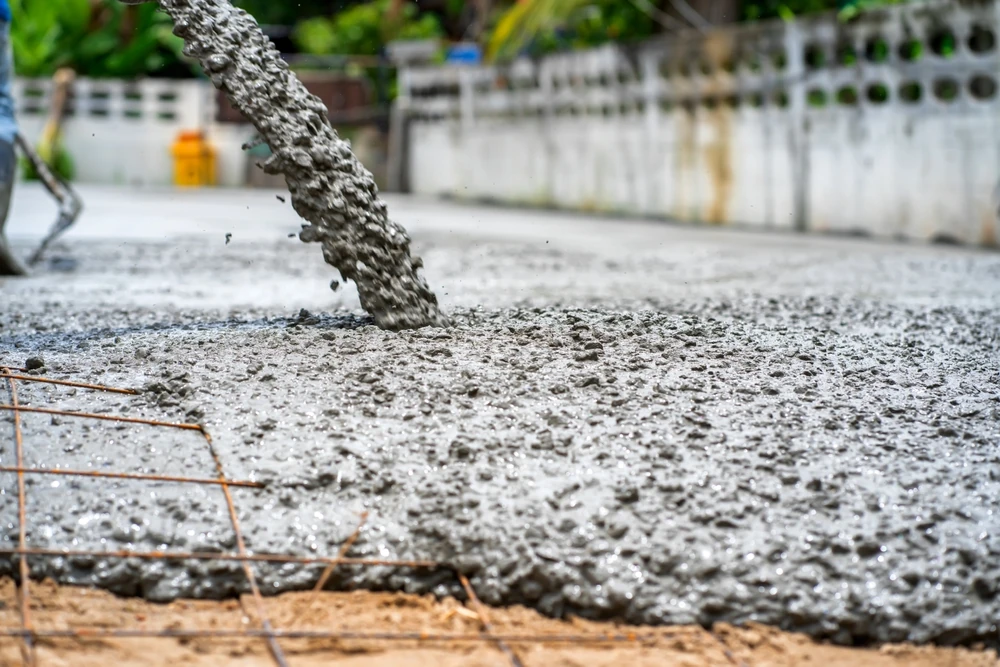
Admixtures are materials added in small amounts to modify the behaviour of fresh or hardened concrete. When chosen and used correctly, they can improve workability, support strength development, reduce cracking and extend service life.
In modern concrete construction, admixtures are often essential rather than optional. They help achieve the combination of workability, strength and durability that many projects now require, especially where environmental exposure or structural demands are more challenging.
Water-reducing admixtures improve workability without adding extra water. This is especially valuable because the water-cement ratio remains the main driver of strength and durability.
Standard water reducers can lower water demand while maintaining slump, and high-range water reducers, often called superplasticisers, can reduce it even further. With less water in the mix, the hardened concrete becomes denser and less porous. That usually means higher compressive and flexural strength, reduced permeability and less drying shrinkage.
These admixtures are commonly used in structural slabs, footings, suspended elements and heavily loaded pavements where both workability and long-term performance are important. The key is correct selection, dosing and timing.
Retarding admixtures slow the setting process, which is useful in hot weather, on longer transport runs or during larger pours where working time needs to be extended. By helping the concrete remain workable for longer, they improve the chances of proper compaction and finishing.
Accelerating admixtures do the opposite. They increase the rate of early strength gain, which can be useful in cold conditions, precast work or projects where formwork needs to be removed earlier. When used correctly, they help meet programme demands without relying on excess cement or water adjustments.
Shrinkage-reducing admixtures help limit the micro-cracking that can occur as concrete dries. By reducing drying shrinkage, they improve appearance, protect reinforcement and support long-term durability.
Supplementary cementitious materials such as fly ash, slag and silica fume are often used to improve both performance and durability. These materials react with compounds released during cement hydration to form additional binding products, which help create a denser and less permeable internal structure.
Well-designed mixes that include these materials can offer better resistance to chloride ingress, lower risk of alkali-silica reaction, improved sulphate resistance and reduced heat build-up in larger pours. Silica fume is especially useful in high-performance concrete where very high strength and very low permeability are required.
A strong mix design can still fail if the concrete is not handled properly on site. Mixing, placement and compaction all have a direct effect on density, bond, strength and durability.
Poor control at this stage can introduce voids, segregation and weak areas that no amount of cement or admixture can fix later. From the time the truck arrives to the final finish, disciplined site practices are essential.
Concrete must be mixed thoroughly so that the cement, water, aggregates and admixtures are evenly distributed. Inconsistent mixing can produce areas that are too rich in paste or too lean in aggregate, leading to variable strength and poor performance.
Once ready-mixed concrete arrives on site, it should be placed within the specified time window. Delays increase the risk of early setting, cold joints and poor finishing outcomes. If workability needs adjustment, that should normally be done through approved admixtures rather than uncontrolled water addition.
Concrete should be placed as close as possible to its final position. Excessive dropping or rough handling can cause segregation, with coarse aggregate separating from the mortar and creating weak or honeycombed zones.
For slabs and footings, placing concrete in a controlled sequence helps maintain a live edge and promotes good bonding between sections. For beams, walls and columns, placing in layers of consistent depth helps ensure better compaction and reduces trapped air around reinforcement.
Dragging concrete across the surface should also be avoided because it can pull coarse aggregate away from the top layer and weaken the finish. Gentle, controlled placement helps keep the mix uniform.
Compaction removes entrapped air and increases concrete density, which is essential for both strength and durability. Poorly compacted concrete can contain significant voids, reducing compressive strength and allowing water and contaminants to penetrate more easily.
Internal vibrators are commonly used for structural work. They should be inserted at regular intervals, allowed to remove trapped air effectively and withdrawn carefully to avoid leaving voids behind. Over-vibration can also be a problem, particularly in wetter mixes, because it may cause segregation.
Consistent and careful compaction gives the concrete the best chance of achieving its designed strength and providing a durable bond around reinforcement.
Curing is the process of maintaining adequate moisture and temperature in freshly placed concrete so hydration can continue properly. It is one of the most important steps in achieving long-term strength and durability.
Even a well-designed and well-placed mix can become weak, dusty or crack-prone if curing is neglected. Concrete needs time and stable conditions to build strength from within. Proper curing reduces moisture loss, limits shrinkage and helps develop a denser, more durable structure.
Concrete hardens because cement reacts chemically with water. If that process is interrupted by rapid drying, excessive heat or cold conditions, strength development suffers.
Poor curing commonly results in lower compressive strength, higher permeability and a greater risk of long-term deterioration. Where reinforcement is present, inadequate curing can also increase the likelihood of moisture and contaminants reaching the steel, which raises the risk of corrosion.
Well-cured concrete develops a tighter bond within the cement paste and around the aggregate and reinforcement. This improves resistance to wear, weather, chlorides and other deterioration mechanisms.
Several curing methods can be effective depending on the project and site conditions. The key is to start curing as soon as the surface can withstand it and to continue for long enough to support proper hydration.
Common options include water curing through ponding, spraying or wet coverings, the use of curing compounds that reduce evaporation, and plastic sheeting that traps moisture at the surface. For slabs and pavements, curing compounds are often applied soon after finishing, sometimes combined with coverings in hot, dry or windy weather. Vertical elements may be wrapped or kept moist after formwork removal.
What matters most is consistency. Good curing is not just a finishing detail. It is a core part of achieving durable concrete.
Weak or cracking concrete usually results from a small number of recurring issues in mix design, site handling or curing. Understanding these causes makes them easier to prevent.
Not all cracking means structural failure, but cracks can allow water and contaminants into the concrete, which speeds up deterioration. Preventing avoidable cracking starts with good control over water content, support conditions, reinforcement and curing.
Excess water is one of the most common causes of weak concrete. Although it makes the mix easier to place and finish, it also increases the water-cement ratio, which lowers strength and increases porosity.
Signs of an over-wet mix can include segregation, bleeding water on the surface and a dusty or weak finish after hardening. To avoid this, slump should be specified correctly from the start and water should only be added when permitted by the mix design and measured carefully.
Concrete depends on the ground beneath it for support. If the subgrade is uneven, poorly compacted or full of organic material, slabs may settle unevenly and crack. A firm, uniform and well-drained base is essential before pouring begins.
Even with good support, concrete will shrink as it cures. If that movement is not managed, it will crack where stresses build up. Properly designed control joints help direct that cracking to planned locations instead of allowing it to appear randomly across the slab. Joints that are too shallow, too widely spaced or cut too late often fail to do their job.
Concrete strength does not come down to one ingredient or one test result. It comes from the combined effect of sound mix design, good materials and disciplined site practice from batching through to curing. Cement type, water-cement ratio, aggregate quality, admixtures and supplementary cementitious materials all play a role in delivering the right balance of workability, strength and durability.
When those technical choices are matched with accurate batching, proper placement, thorough compaction and effective curing, concrete is far better equipped to resist cracking, moisture ingress, chemical attack and long-term wear. That is what turns a basic pour into a durable structure that performs reliably for years.
Call our friendly and highly experienced team today to get your concrete, sand, aggregate, and landscaping products.
-1.png)

