
Are Concrete Sleepers Better Than Timber for Retaining Walls?
April 30, 2026
When planning a new retaining wall in Newcastle or the Hunter Valley, one of the biggest decisions is whether to use concrete sleepers or traditional timber. The material you choose affects the wall’s strength, appearance, maintenance needs and long-term cost. At Maitland Ready Mixed Concrete, a supplier of ready mixed concrete in Newcastle, we work with homeowners, builders and civil contractors who regularly weigh up these options, so we understand why choosing the right material from the start matters.
Concrete and timber sleepers can both be used successfully, but they perform very differently once installed. Soil pressure, drainage, wall height, termites, moisture and local weather conditions all influence how long a retaining wall will last. This article compares concrete and timber sleepers across strength, durability, maintenance, cost and suitability, helping you choose the right option for your site.
A retaining wall does more than create a neat boundary or level out a garden. It holds back soil, manages changes in ground level and often supports nearby landscaping, driveways, paths or outdoor living areas. Because of this, the material used in the wall has a direct impact on safety, lifespan and performance.
In Newcastle and the Hunter Valley, retaining walls may need to deal with heavy rain, reactive clay soils, coastal humidity, sloping blocks and poor drainage. These conditions place ongoing pressure on the wall and can quickly expose weaknesses in the chosen material. A sleeper that looks suitable at installation may not perform well over time if it cannot handle moisture, soil movement or load.
Choosing between concrete and timber should therefore be based on more than upfront cost or appearance. The right choice depends on how high the wall is, what it is retaining, how wet the site gets and how long the structure needs to last.
Retaining walls must resist the sideways pressure created by soil. This pressure increases with wall height, poor drainage, sloping ground and any added loads above the wall, such as driveways, sheds, fences or buildings.
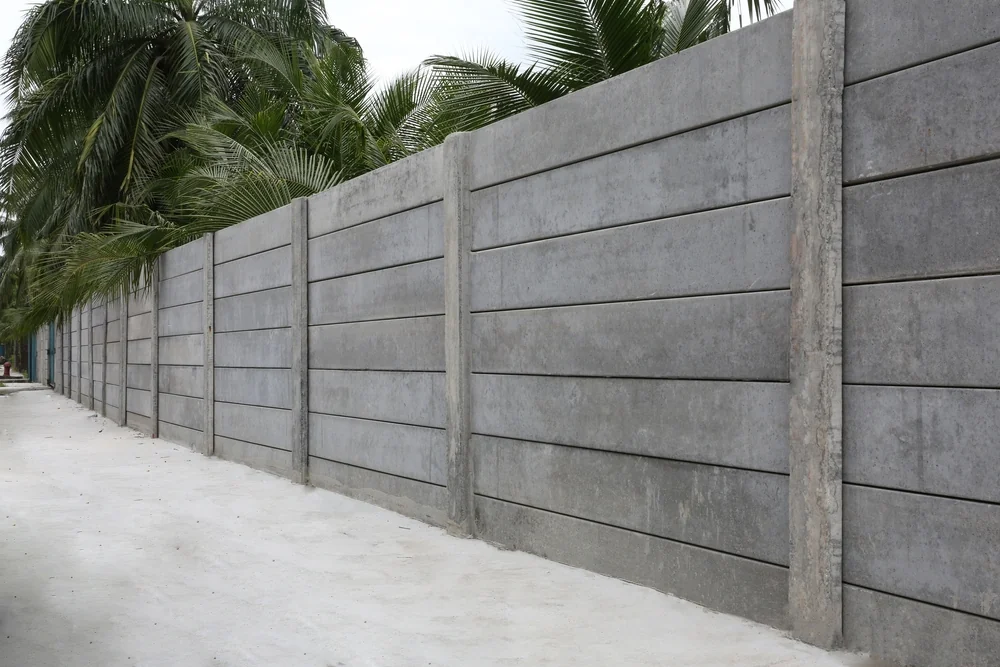
Concrete sleepers are generally stronger and more predictable than timber. They are manufactured to consistent specifications and are often reinforced with steel, giving them the ability to span between posts without bowing or sagging under normal design conditions. When combined with properly sized steel posts, footings and drainage, concrete sleeper walls are well suited to structural retaining applications.
Timber sleepers can still perform well in low walls and lighter-duty landscaping, but their strength is less predictable. Timber can warp, split, bow or deteriorate over time, especially when exposed to damp soil. As wall height increases, timber sleepers need to be thicker, stronger and more carefully specified, which can reduce the cost advantage they appear to have at the beginning.
For walls above roughly 800 mm to 1 metre, or where engineering approval may be required, concrete is often the clearer choice. It provides more consistent structural performance and is easier to design around when compliance, load bearing and long-term stability matter.
Durability is one of the biggest differences between concrete and timber sleepers. Local conditions can be tough on retaining walls, particularly in areas affected by heavy rain, clay soils, high groundwater, garden irrigation or coastal moisture.
Concrete sleepers are not affected by rot or termites. When properly manufactured and installed with suitable drainage, they can handle long-term ground contact and repeated wetting and drying. Their durability makes them a strong option for retaining walls near lawns, garden beds, pools, driveways and damp areas where timber may deteriorate faster.
Timber sleepers are more vulnerable in these environments. Even treated pine or hardwood will eventually break down when exposed to moisture, soil organisms and termites. The risk is higher where drainage is poor, mulch is placed against the wall or the area remains shaded and damp for long periods.
This does not mean timber is unsuitable for every retaining wall. However, property owners need to understand that timber generally has a shorter service life and may require repairs or replacement much earlier than a well-built concrete sleeper wall.
A properly designed and installed concrete sleeper retaining wall can last for several decades. In many residential settings, concrete sleeper walls commonly last 40 years or more, provided drainage is managed and the wall is built to suit the site conditions. Maintenance is usually limited to occasional cleaning, checking for movement and keeping drainage outlets clear.
Timber retaining walls generally require more attention. Depending on timber type, treatment level, drainage and exposure, many timber sleeper walls may begin showing significant deterioration within 10 to 20 years. This can include rot, splitting, bowing, termite damage or movement around posts and fixings.
Maintenance for timber walls may include staining or oiling exposed surfaces, checking for decay, monitoring termite activity and replacing damaged sleepers. These jobs may seem minor at first, but they become more difficult once the wall is holding back soil and landscaping has been established around it.
For homeowners who want a low-maintenance retaining wall, concrete sleepers usually provide the more practical long-term solution.
Timber sleepers often look cheaper at the quoting stage, especially for small, low retaining walls. They are lighter, easier to handle and can suit simple garden projects where structural loads are limited.
Concrete sleepers usually cost more upfront due to the material itself, heavier handling requirements and the need for suitable posts and footings. However, the higher initial cost is often balanced by a much longer lifespan and lower maintenance needs.
When comparing the two options, it is important to look at whole-of-life cost rather than just the starting price. A timber wall that needs major repairs or replacement after 10 to 15 years may end up costing more than a concrete sleeper wall that lasts for decades with minimal attention.
Concrete sleepers tend to offer better value where the wall is high, structural, difficult to access, exposed to moisture or expected to remain in place for the long term. Timber may still make sense for budget-conscious projects where the wall is low, decorative and easy to replace later if needed.
Concrete sleepers are generally the better choice for retaining walls where strength, longevity and low maintenance are priorities. They are particularly well suited to medium and high retaining walls, sloping blocks and areas where soil pressure is significant.
Concrete sleepers are also a strong option for:
Their consistent strength and durability make concrete sleepers easier to rely on in structural situations. They also come in a range of colours and finishes, including styles that mimic timber or stone, so they can still suit decorative landscaping without the same maintenance demands as natural timber.
Timber sleepers still have a place in some retaining wall projects. They can work well for low garden edging, small decorative walls and short to medium-term landscaping where heavy loads are not involved.
Timber may be suitable for:
The key is to use timber within its limits. It should not be treated as a direct substitute for concrete in higher, structural or moisture-prone retaining walls. If timber is used, the correct treatment level, post spacing, drainage and installation method become essential.
For homeowners choosing timber mainly because of cost, it is worth considering how easy the wall will be to repair or replace in the future. If replacement would require removing established gardens, paving, fencing or access structures, concrete may be the better long-term investment.
In many Australian council areas, retaining walls may need approval or engineering depending on their height, location and impact on neighbouring properties. Requirements can vary, but factors such as wall height, surcharge loads, boundary position, drainage and proximity to structures are commonly considered.
A low garden wall may not need the same level of documentation as a retaining wall supporting a driveway or a neighbour’s land. However, any wall that retains significant soil should be treated seriously. Poor design can lead to cracking, leaning, drainage failure or collapse.
Concrete sleeper systems are often easier to specify for engineered retaining walls because their strength and performance are more predictable. Timber can also be designed for certain applications, but it may not provide the same long-term certainty, particularly in damp or high-load conditions.
Before building, it is always worth checking local council requirements and seeking professional advice where the wall is structural, close to a boundary or above a certain height.
In most permanent retaining wall projects, concrete sleepers are the better long-term choice. They offer stronger structural performance, better resistance to moisture and termites, lower maintenance and a much longer service life than timber. This makes them especially suitable for Newcastle and Hunter Valley sites where soil movement, rainfall, drainage and coastal exposure can all affect retaining wall performance.
Timber can still be a practical option for low decorative walls, small garden beds and short-term landscaping projects where cost and appearance are the main priorities. However, it usually requires more maintenance and is more likely to need replacement over time.
The best choice depends on the height of the wall, the site conditions, the load being retained, the budget and the expected lifespan of the project. For walls where strength, durability and long-term value matter most, concrete sleepers usually provide the safer and more reliable solution.
Call our friendly and highly experienced team today to get your concrete, sand, aggregate, and landscaping products.
-1.png)

