
Choosing Soil for Raised Beds, Not Just Filling the Space
October 23, 2026
A new raised bed can look ready for planting as soon as it is full. What matters, though, is how the soil behaves after watering, through summer and as its organic ingredients break down. Choosing a material based mainly on price or appearance can leave plants growing in a medium that dries too quickly, stays too wet or loses considerable depth over time.
Before ordering materials for a garden, understand the differences between topsoil, garden blends and compost. Knowing what each material contributes, how settling occurs and which questions to ask suppliers makes it easier to choose a growing medium suited to the bed's construction and the plants it will support.
Raised garden bed soil needs to provide a stable root zone, retain enough moisture for healthy growth and allow excess water to drain. For many open-bottom beds, a suitable soil-based garden blend containing mature organic matter is a sensible starting point. Beds with solid bases need a growing medium designed for containers or confined spaces.
The right choice depends on the plants, available root depth, drainage and condition of the ground beneath the bed. Product names alone are not enough to establish suitability, as materials sold as garden mix can contain different proportions of mineral soil, compost and other ingredients.
Topsoil refers to material from the upper soil layer, although its texture and quality vary based on its source. It may contain sand, silt, clay and organic matter in different proportions. Sandy topsoil often drains readily but holds less water, while clay-rich material may retain moisture but become dense if handled or placed poorly.
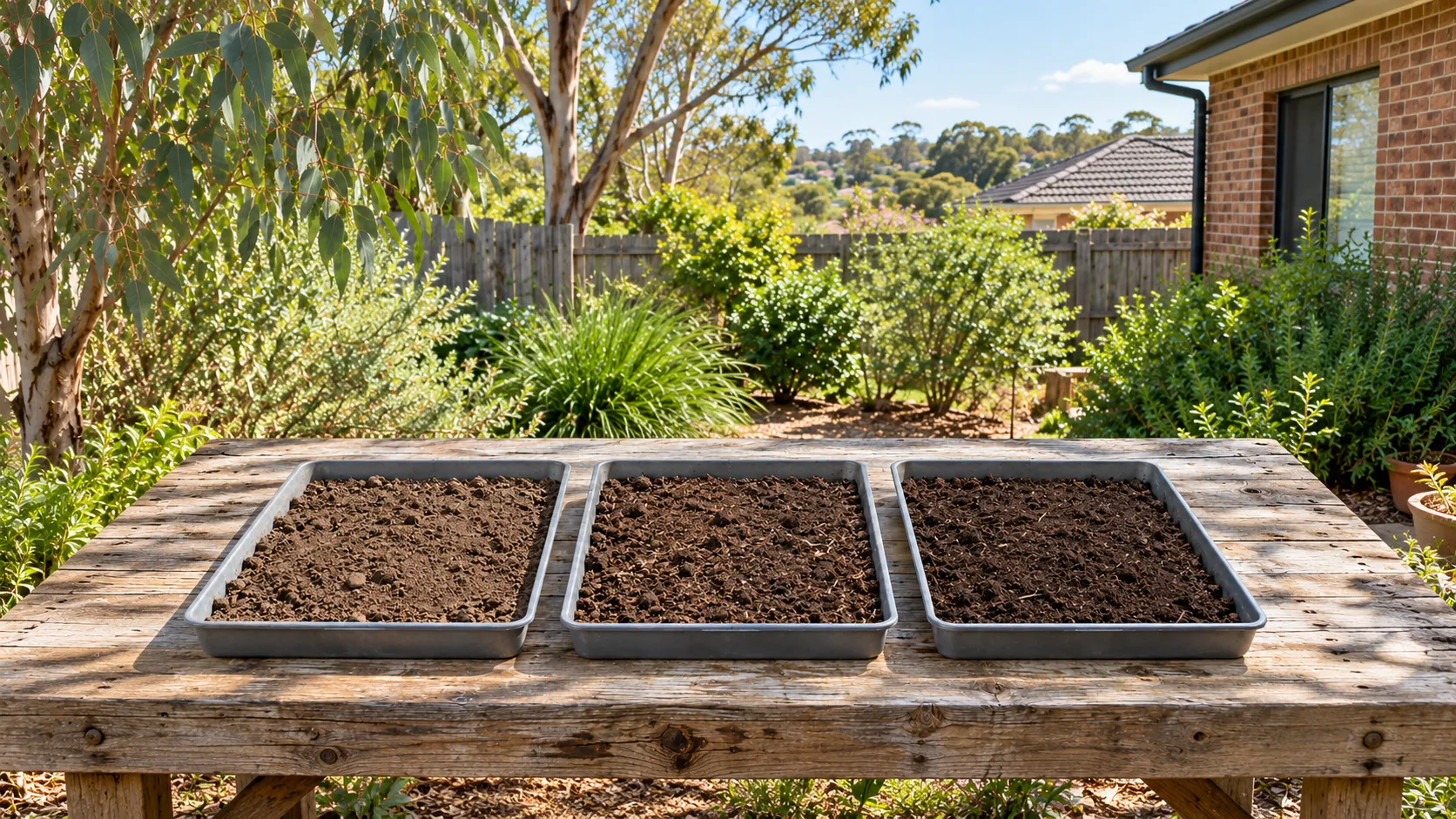
Mineral soil provides a relatively persistent framework for plant roots, but not every topsoil is suitable for raised beds. Texture, drainage, weed content and the material's source all affect its usefulness. Ask about these characteristics rather than assuming that any product labelled topsoil will support healthy growth.
A garden blend combines ingredients to achieve specific growing conditions. Some products are intended to improve existing garden beds, while others can serve as the main growing medium. Before ordering, confirm the product's intended use and whether it is suitable for filling a raised bed to its full growing depth.
Compost serves a different purpose. Mature compost contributes organic matter, supports soil structure and helps regulate moisture, but it is not interchangeable with mineral soil. Its nutrient content varies and its volume can continue to decrease as organic material decomposes. Filling a bed with compost may create a less stable growing environment than a suitable soil-based blend.
An open-bottom raised bed sits directly over the ground, allowing roots to extend into the underlying soil when conditions permit. The imported fill still needs to provide a suitable growing environment while plants are establishing themselves. Dense, compacted or persistently wet ground beneath the bed can also restrict root growth and drainage.
A bed with a solid base behaves more like a large container. Water cannot drain into the ground below and roots have no access to the surrounding soil. Ordinary garden soil may become too dense in this setting, so a purpose-designed container growing medium is a better starting point. The bed must also have suitable drainage outlets to prevent waterlogging.
Consider the plants' needs before deciding on the material. Vegetables and herbs benefit from a growing medium that balances moisture retention, drainage and nutrient availability. Plants that prefer drier conditions may need a different balance, while deeper-rooted varieties require sufficient usable soil depth rather than simply a tall frame.
The bed's construction matters too. Its walls must retain the fill without compromising drainage or usable planting space. These ideas for durable garden edging provide related considerations for planning garden boundaries.
Some loss of soil level after filling is normal. The important distinction is between initial settling, when particles move closer together and longer-term volume loss as organic matter decomposes. Both processes can reduce the depth of the growing medium, but they occur for different reasons.
The amount of change depends on the blend's composition, how it is placed, watering conditions and the maturity of its organic ingredients. A bed containing substantial amounts of fresh or readily decomposable material may lose more depth than one with a suitable mineral framework.
Freshly placed soil contains spaces between particles and clumps. Watering and natural movement allow some of these spaces to close, bringing the material into closer contact. This initial settling can occur in blends containing mineral soil as well as organic matter and it does not automatically indicate poor quality.
Longer-term changes occur as microorganisms break down organic material. Some of its carbon is released into the atmosphere, while the remaining material changes in structure and volume. A bed with a high proportion of decomposable ingredients can continue losing depth after the initial settling has finished.
Mature compost is more stable than fresh plant waste, but it is not permanent. Its rate of decomposition depends on the ingredients, maturity, moisture and growing conditions. There is no single compost percentage that suits every raised bed, so the overall composition should be assessed against the intended use.
A suitable mineral component provides a more lasting framework, while organic matter contributes to moisture retention and soil structure. The aim is to achieve a useful balance rather than relying on compost alone to maintain the bed's depth.
Avoid trying to prevent all settling by heavily compacting the fill. Roots need pore space for air and water movement and excessive compression can make the growing environment less suitable for plants. Allow the material to settle naturally, then assess whether any additional fill is needed.
Branches, fresh woodchips and other bulky plant materials can appear to be a convenient way to reduce the amount of purchased soil. However, using large quantities beneath a thin layer of growing medium can make the bed's long-term depth less predictable.
As woody pieces break down or shift, gaps may collapse and leave the surface uneven. The usable growing layer can become shallower than expected if the lower material was placed loosely or occupies a substantial portion of the bed.
Fresh woody material mixed into the active root zone can also temporarily reduce the availability of nitrogen as microorganisms decompose it. The effect depends on the material and how it is used, so woody waste should not be treated as a direct substitute for suitable soil.
If a layered filling method is being considered, calculate the usable soil depth separately from the overall frame height. Allow for potential shrinkage and make sure the final growing layer is deep enough for the intended plants. A bed that looks full on installation day may not retain the same growing depth over subsequent seasons.
Comparing soil products requires more than looking at colour, texture or price. The most useful questions establish what the blend contains, whether it is intended for the proposed application and what information is available to support its suitability.
A dark, crumbly material may look appealing without providing the right drainage, nutrient balance or long-term stability. Asking suppliers the same questions makes it easier to compare products on their suitability for the bed rather than relying on broad descriptions such as garden soil.
Start by asking what the blend contains. Find out whether it includes mineral soil, compost, sand or other organic ingredients and whether its composition is reasonably consistent between loads. A supplier may not disclose an exact recipe but should be able to explain the product's general composition and intended use.
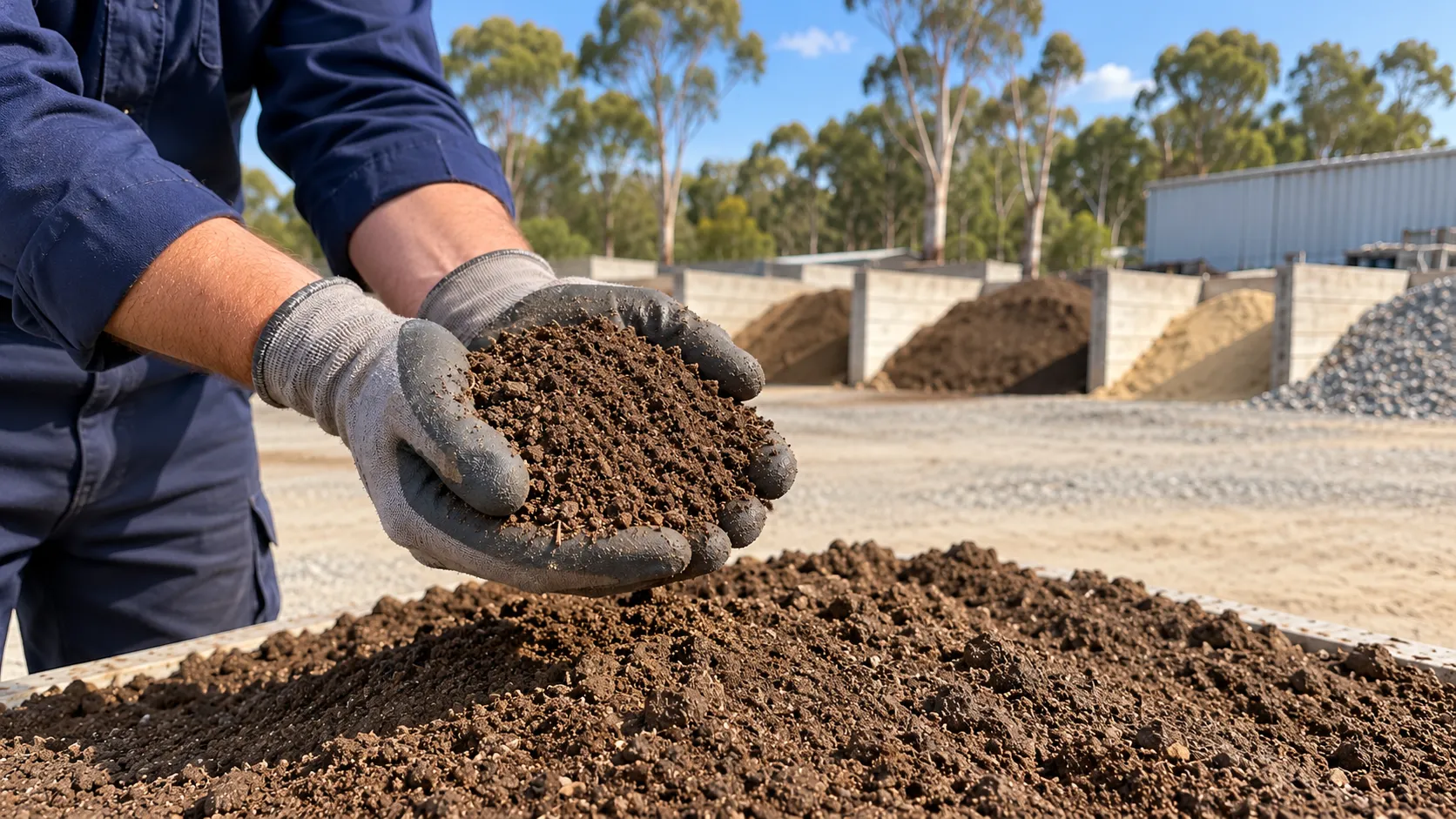
Describe the bed's construction, dimensions and planting plans. Explain whether it has an open bottom or a solid base, how deep the growing medium needs to be and which plants will be grown. Then confirm whether the material is suitable as the main growing medium or is intended to be mixed into existing soil.
For vegetable and herb beds, ask whether the product is intended for growing edible plants. Also, check what is known about the source of the soil and organic components. A material suitable for ornamental landscaping should not automatically be assumed suitable for every food-growing application.
If a sample is available, inspect it for consistency, large undecomposed pieces and obvious debris. Feel can provide clues about texture, but visual inspection cannot establish fertility, salinity or the material's history. Treat a sample as one part of the assessment rather than a substitute for reliable product information.
Ask whether the compost component is mature and how its maturity is assessed. Material that is still actively decomposing can change more rapidly and may behave unpredictably around plant roots. Strong odours or noticeable heat can prompt further questions, but their absence does not prove that compost is fully mature.
Salinity is another consideration in blends containing substantial compost or manure-derived ingredients. Excess soluble salts can interfere with plants' ability to take up water. Ask whether salinity information is available, along with pH and nutrient results where relevant to the intended plants.
If testing information is provided, check that it relates to the material being supplied and ask how the results should be interpreted for the intended growing use. Test methods and acceptable ranges can vary, so individual numbers should not be treated as universal pass-or-fail measures.
For local enquiries, Maitland Ready Mixed Concrete can be contacted through its landscaping products in Newcastle. Describe the bed's construction and planting plans, then confirm which suitable materials are currently available and whether ingredient details or supporting test information can be provided.
Growing conditions vary across Newcastle and the surrounding region. A sunny, exposed bed may lose moisture quickly, while a sheltered garden with limited direct sunlight may remain damp for longer. The soil beneath an open-bottom bed can also influence drainage and root development.
Rather than assuming that all local gardens have the same soil or exposure, assess the conditions at the actual planting site. The most suitable growing medium should balance moisture retention with drainage, provide enough usable depth for the plants and remain manageable as organic matter gradually breaks down.
Before ordering, observe how much direct sunlight reaches the bed and whether nearby structures shelter it from wind. A raised bed exposed on several sides may dry differently from an in-ground garden, especially during warm weather. Underlying soil texture and drainage can also differ between properties, so local conditions should be assessed individually.
In a sunny position, moisture retention becomes vital because plants may need more frequent watering. Organic matter can help hold moisture, but simply adding more compost is not a complete solution. The blend still needs suitable structure and drainage to maintain a healthy root zone.
In a shaded or sheltered position, avoid choosing a growing medium solely for maximum water retention. Roots need oxygen as well as moisture and persistently wet soil can restrict healthy growth. If water remains in the bed for extended periods, investigate the growing medium, the bed's drainage and the condition of the ground beneath it.
Watering practices also affect performance. Frequent, light watering may wet only the surface while leaving deeper roots dry. Check moisture below the surface and adjust watering according to the plants, weather and growing medium instead of following a rigid schedule.
Surface mulch can help reduce evaporation and moderate moisture fluctuations. However, mulch serves a different purpose from the growing medium beneath it. A protective surface layer cannot compensate for unsuitable soil or inadequate drainage. For other material choices around the garden, these low-maintenance garden materials offer additional context.
Leave practical space between the soil surface and the top of the frame for watering, mulch and modest future additions. Filling the bed to the brim can cause material to spill over the edges and make routine maintenance more difficult.
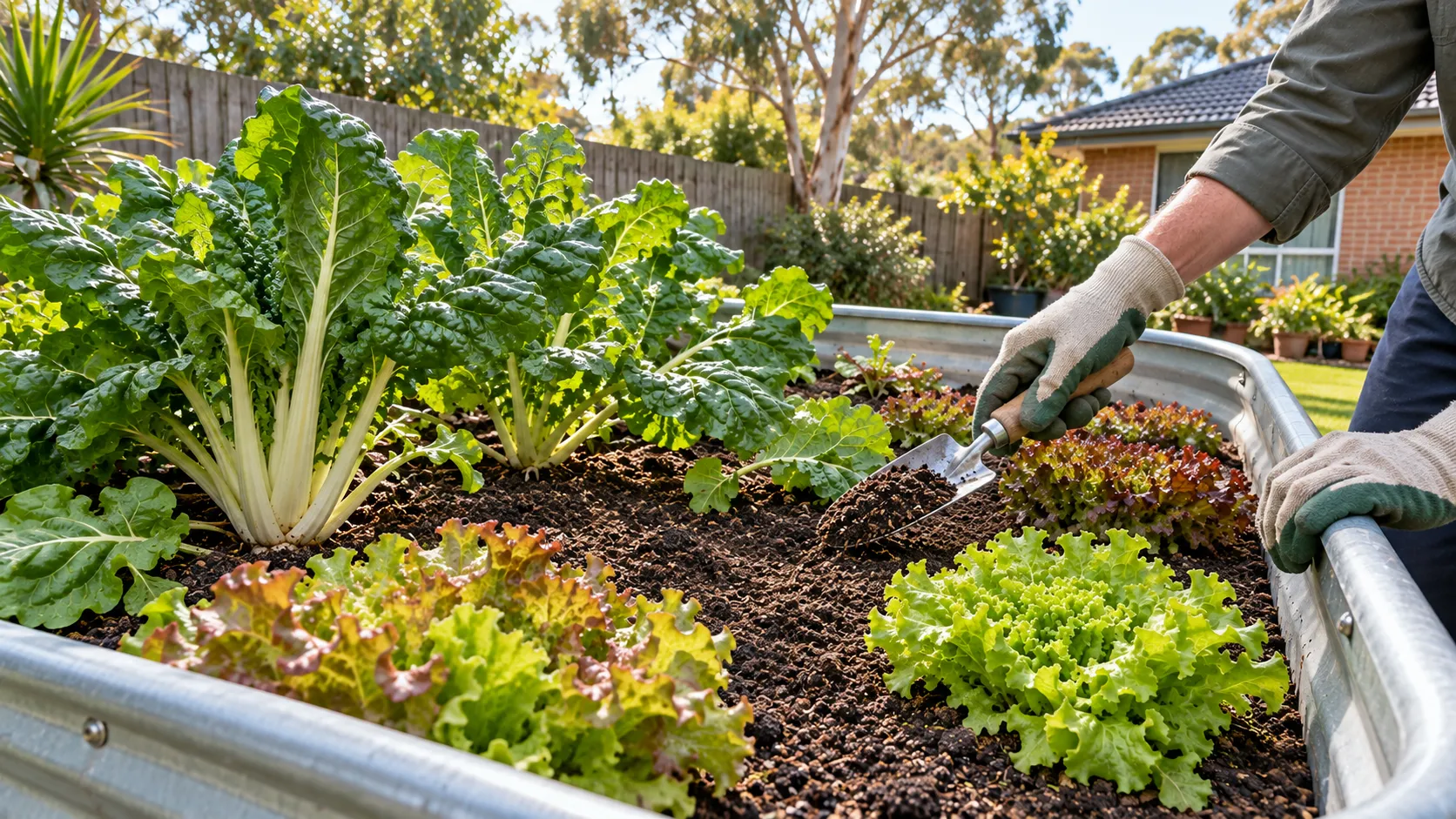
After the first few watering sessions, check the soil level and allow initial settling to occur before deciding whether more material is needed. Later additions should respond to actual changes in growing depth rather than an assumption that every drop in level indicates a problem.
Use a compatible soil blend when the growing layer needs substantial replenishment. Mature compost can be incorporated in appropriate amounts to improve soil condition, but repeatedly adding large quantities of compost may change the blend's composition rather than simply restore its original depth.
The gap between planting cycles is often the easiest time to replenish vegetable beds and mix in suitable amendments. Around established plants, add material gradually and keep soil and mulch away from crowns and stems that need to remain exposed. If substantial settlement has changed planting depth or exposed roots, assess the cause before adding more fill.
Choosing soil for a raised garden bed involves more than filling the frame. The material needs to suit the bed's construction, provide adequate root depth and balance drainage with moisture retention. Its composition also determines how much the growing layer may change as organic matter breaks down.
Comparing ingredients, intended uses and available testing information helps gardeners make a decision before ordering. Maitland Ready Mixed Concrete can be contacted to discuss suitable landscaping materials for a planned garden project and confirm which options are available.
Call our friendly and highly experienced team today to get your concrete, sand, aggregate, and landscaping products.


