
Is My New Concrete Dry Enough for Flooring?
October 23, 2026
A new concrete slab can look solid, feel dry and be ready for trades to walk across, yet still contain too much moisture for flooring installation. Installing a floor covering before the slab meets the required moisture conditions can lead to adhesive failure, damaged finishes and costly rework.
Before confirming an installation date, distinguish concrete strength from moisture readiness. For Newcastle builders, developers and homeowners, professional moisture testing, suitable drying conditions and early coordination with flooring installers can help prevent delays and protect the finished floor.
Concrete develops strength through curing, while drying involves moisture leaving the slab. Although these processes occur together, they serve different purposes. Strength determines whether the concrete can perform its intended structural role, while flooring readiness depends on whether its moisture condition meets the requirements of the selected floor covering and installation system.
A slab that can support construction activity is not automatically suitable for flooring. Adhesives, primers, underlays and floor coverings can have specific moisture limits that must be met before installation begins.
Water is an essential part of the concrete mix and supports the chemical reactions that develop strength. Some moisture remains within the concrete as these reactions progress, while excess moisture must move through the slab and evaporate from exposed surfaces.
This process takes time. A slab may develop a firm, dry-looking surface while retaining considerable moisture deeper inside. Once flooring is installed, evaporation becomes restricted, creating conditions that affect the bond between the concrete and the covering.
Proper curing should not be shortened simply to bring the flooring date forward. Curing supports the concrete's intended performance, while moisture readiness requires a separate assessment against the proposed flooring system.
Concrete specifications also serve different purposes. Strength requirements, workability and other properties are selected to suit the project, rather than to guarantee a flooring installation date. Understanding the differences between standard, high-strength and specialty concrete can help clarify the role of mix selection in the broader construction process.
Excess moisture can interfere with some adhesive bonds, causing lifting, bubbling or sections of flooring to detach. Certain coverings may also swell, distort or move when exposed to unsuitable moisture conditions. These problems may only become visible after installation, when repairs are more disruptive and expensive.
Different flooring materials have different requirements. Timber, resilient flooring and other finishes can respond differently to moisture, while the adhesive, primer and underlay may introduce additional restrictions. A water-resistant floor covering does not automatically make the complete installation suitable for a damp slab.
The slab must meet the moisture requirements of the entire flooring system, not just the visible covering. The flooring installer should confirm that the conditions are acceptable before work proceeds, even if the concrete has already reached the strength needed for construction.
Concrete slab moisture testing provides evidence that can be compared with the requirements of the proposed flooring system. Visual checks and estimated drying periods may help with preliminary planning, but neither can establish that a slab is ready for installation.
The flooring installer should identify the appropriate testing method, explain who will arrange the assessment and confirm how the results will be evaluated. These decisions should be made before the installation date is finalised.
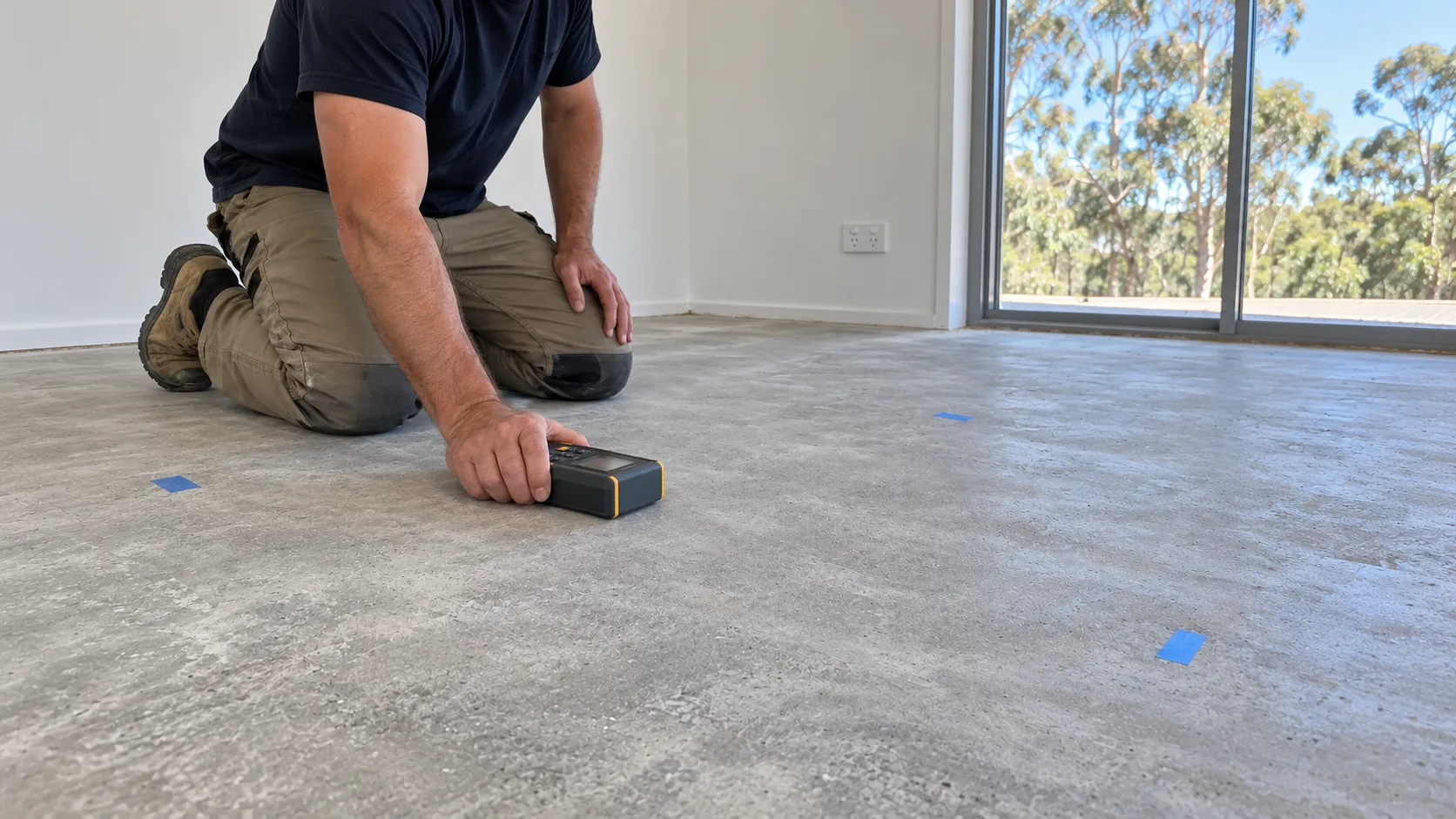
Concrete often changes colour as its surface condition changes, but colour does not reliably indicate moisture throughout the slab. Finishing techniques, exposure and surface treatments can also affect its appearance. A pale or uniform surface is not proof that the concrete is ready for flooring.
Touch has similar limitations. It reveals the condition of the exposed surface at that moment, rather than the amount of moisture held deeper within the concrete. Moisture can continue moving towards the surface even after the slab appears dry.
Time alone is also an unreliable measure. Two slabs poured on the same day may experience different rainfall, ventilation, indoor humidity and drying exposure. Thickness and the number of exposed drying surfaces can influence the process as well.
A handheld surface meter may help a professional identify areas of concern during concrete moisture testing, but a single reading should not automatically be treated as approval for installation. The testing method, equipment and flooring manufacturer's requirements influence how results should be interpreted.
The installer should identify the required moisture test or arrange for a testing professional to carry it out. One method used for concrete slabs is in-slab relative humidity testing, which assesses moisture conditions within the concrete rather than relying solely on the exposed surface.
Surface-based moisture tests may also be appropriate where the flooring specification calls for them. These methods do not necessarily measure the same thing, so their results should not be treated as interchangeable. The appropriate method depends on the requirements of the flooring, adhesive and relevant installation specifications.
Ask for a written report identifying the test method, locations, dates and results. The installer can then compare the findings with the requirements of the complete flooring system, including any primer, levelling compound or moisture-management layer.
There is no universal pass threshold that applies to every floor covering and adhesive combination. If the selected products change after testing, the installer should confirm whether the existing results remain suitable. Changes in site conditions, including further water exposure, may also justify reassessment.
Testing supports a specific installation decision. It is not a guarantee that the slab will suit every future flooring choice or remain unaffected by subsequent moisture exposure.
Concrete drying depends on the slab itself and the environment around it. Thickness, exposure to water, airflow, temperature and ambient humidity can all influence how moisture leaves the concrete. This makes it difficult to set a reliable flooring date using the pour date alone.
On a building project, a slab may initially dry in open-air conditions before the building is enclosed. The surrounding temperature, ventilation and humidity can change during this transition. Testing and installation planning should account for these changes rather than assuming that drying will progress at a constant rate.
A thicker slab presents a longer path for moisture movement, although thickness alone cannot predict when flooring can be installed. Whether moisture can escape through one surface or multiple surfaces also affects drying, as do the slab's construction and moisture protection.
These considerations should inform planning, not prompt changes to the slab specification simply to meet a flooring appointment. Structural requirements remain the responsibility of the relevant building professionals, while the flooring installer needs accurate information about the slab and its drying conditions.
Rain can introduce additional moisture while the slab is exposed. Repeated wetting may delay progress towards acceptable flooring conditions, even when the surface dries between showers. Leaks or water entering during later construction stages can also affect areas that previously appeared ready.
Known wetting events, leaks and areas where water has collected should be reported to the flooring installer. This information helps determine whether further drying or additional testing is needed and whether an ongoing source of moisture must be investigated.
Enclosing a building changes airflow and the surrounding moisture conditions. Ventilation can support drying, but its effectiveness depends on the humidity of the incoming air. Opening windows does not automatically create suitable drying conditions.
Temperature and ambient humidity also affect moisture movement. Rooms within the same building may behave differently when airflow is restricted or wet construction activities are continuing nearby. Conditions during testing should be considered alongside those expected during flooring installation and building occupancy.
Any proposed environmental controls should be coordinated by the builder and flooring professional. Heating or drying equipment should not be selected on the assumption that faster surface drying will resolve every moisture issue. The slab's condition and the flooring system's requirements must guide the decision.
Moisture entering from below is a separate concern from residual moisture after concrete placement. If ongoing moisture ingress is suspected, the building professional should investigate the slab design, moisture protection and possible water sources. Allowing more drying time may not address the underlying cause.
Early coordination makes these variables easier to manage. Reviewing common concrete-related project delays can also help with broader construction planning, although flooring acceptance still requires its own assessment.
Start by identifying the intended flooring system and confirming its moisture requirements. Coordinate testing with the builder and flooring installer before committing to a fixed installation date. This approach provides a more reliable basis for scheduling than relying on a universal number of days after the pour.
Clear responsibilities are equally important. Concrete supply, slab construction and flooring assessment are separate parts of the project. Information from each stage supports the next, but a concrete delivery or construction milestone does not establish approval for flooring installation.
Selecting the flooring system early gives the project team time to understand the requirements of the covering, adhesive and associated products. The installer should confirm the complete proposed system rather than assessing the visible finish alone, as a later product substitution may change the moisture limits or preparation requirements.
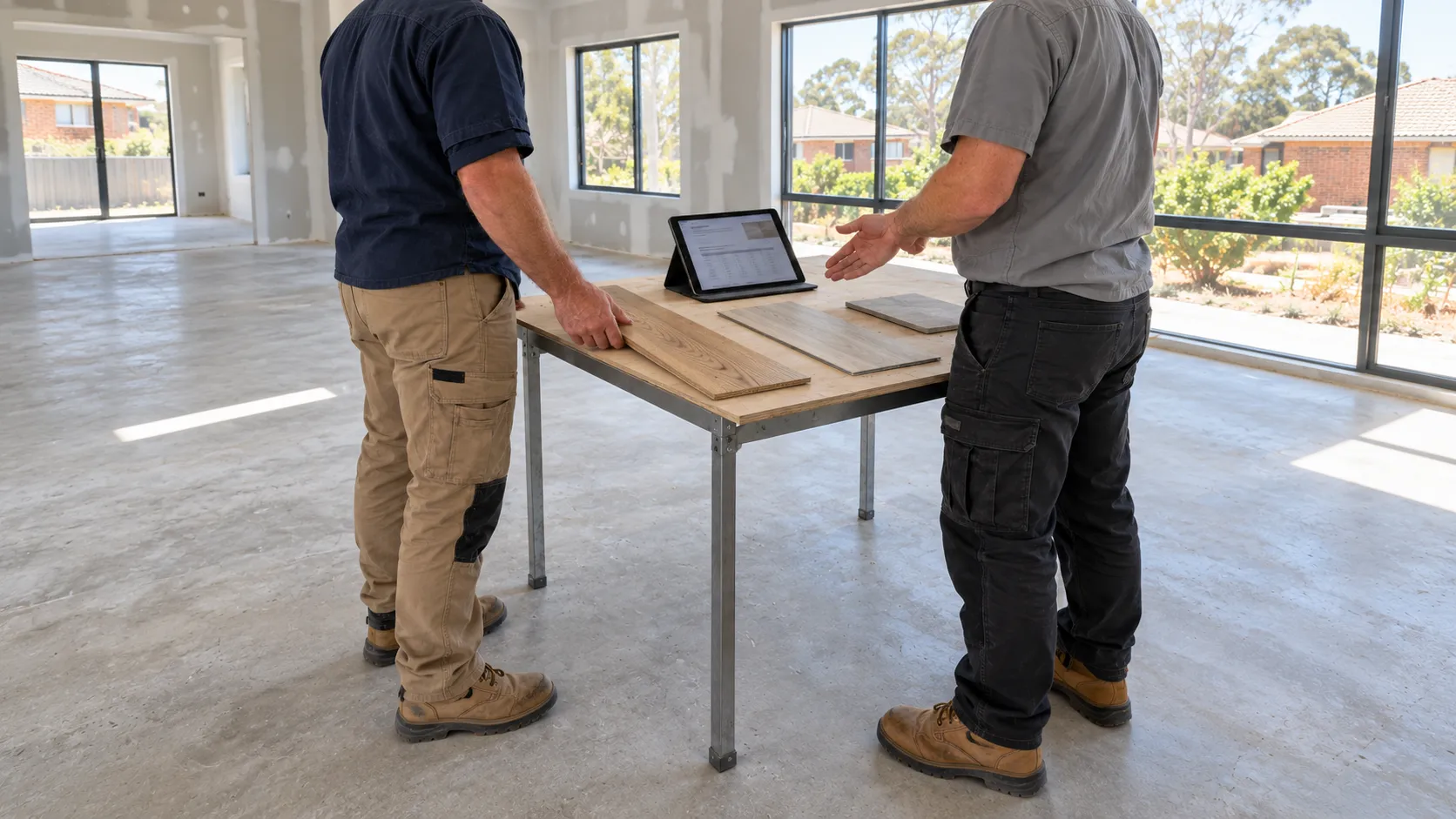
Share available slab information with the installer, including construction details, placement timing and known water exposure. The builder can help provide relevant records. If information is missing, the installer should explain whether further assessment is needed before approving the work.
When selecting a concrete supplier in Newcastle, keep concrete supply decisions separate from flooring approval. Professionals remain responsible for assessing whether the slab meets the requirements of the proposed finish.
Agree on who will arrange moisture testing and who will review the report. The project schedule should allow time to discuss unsuitable readings, organise follow-up assessments and adjust trade bookings if the slab needs additional drying.
A provisional installation date can help coordinate the project, provided it remains conditional on acceptable test results. Before confirming the booking, ask the experts to verify that the results meet the selected system's requirements and that subsequent site conditions have not undermined the assessment.
Keep the moisture report and agreed installation requirements with the project records. Written documentation helps resolve questions if the flooring choice changes or the programme is revised. It also reduces reliance on informal assurances that the slab looks ready.
Elevated moisture readings may indicate that the slab needs more drying time, but they can also point to an ongoing source of moisture. The appropriate response depends on the test results, the cause of the moisture and the requirements of the flooring system.
If the readings remain above the accepted limits, the installer should explain the available options. These may include allowing more time for drying, investigating moisture ingress or considering a specified moisture-management system.
Any proposed remedial system must be compatible with the concrete, adhesive and floor covering. Its suitability should be confirmed before installation proceeds. Covering the slab without investigating unsuitable moisture conditions risks concealing the problem rather than resolving it.
A concrete slab is ready for flooring when its moisture condition meets the requirements of the selected flooring system, not simply when it looks dry or has reached sufficient strength for construction. Planning can reduce avoidable delays and protect the finished floor from moisture-related damage. Maitland Ready Mixed Concrete can assist with concrete supply enquiries, while the builder and flooring professional can coordinate the testing and installation requirements needed for the next stage of the project.
Call our friendly and highly experienced team today to get your concrete, sand, aggregate, and landscaping products.


