
What Happens If You Do Not Order Enough Concrete?
July 24, 2026
Choosing the right concrete supplier in Newcastle is an important part of preventing costly problems during a concrete pour. Running out of concrete partway through the job can do far more than delay the work. It can create an unplanned cold joint, affect the finish and consistency of the slab, disrupt other trades and increase project costs when schedules or weather conditions are already tight.
Maitland Ready Mixed Concrete understands the importance of accurate planning and dependable concrete supply. By checking measurements, site conditions, access requirements and practical volume allowances before ordering, builders and property owners can reduce the risk of shortages and achieve a more continuous, efficient pour.
An unexpected interruption can affect the appearance, durability and long-term performance of concrete if the resulting joint is not correctly positioned and prepared.
When the first load begins to set before more concrete arrives, crews may need to make rushed decisions about where to stop, how to finish the placed concrete and how to prepare the area for the next load.

A cold joint can form when fresh concrete is placed against concrete that has already started to set. If a pour stops because the ordered volume is insufficient and resumes after a delay, the interface between the two placements may not behave like a single continuous pour.
A cold joint is different from a planned construction joint. Construction joints are intentionally positioned and detailed so separate concrete placements can transfer loads as required. An uncontrolled cold joint may occur in an unsuitable location without the necessary surface preparation or reinforcement details.
Possible consequences include:
In driveways, paths and patios, an unplanned joint may become a point where cracking begins. In structural elements such as walls, beams, footings and suspended slabs, the significance of the joint depends on its location, reinforcement, design and preparation.
Where structural work is involved, an unexpected interruption should be assessed by the site supervisor, concreter or engineer rather than being treated only as a finishing issue.
When a crew realises there is not enough concrete on site, the finishing process can become reactive. Some areas may be overworked in an attempt to stretch the remaining material, while other sections may be left unfinished as attention shifts to the most critical parts of the pour.
Common finishing problems associated with an interrupted pour include:
These defects can be difficult and expensive to correct after the concrete has set. Grinding, patching or overlays may improve the appearance, but they do not recreate the consistency of a properly completed continuous pour.
A concrete shortage can also create variations in slab depth. If the remaining concrete is spread more thinly than specified, some areas may have inadequate thickness or reduced cover over reinforcement.
Possible consequences include:
In structural elements, an unplanned or poorly prepared joint may reduce load transfer or create a potential weakness, particularly where it crosses a critical shear or bending region.
Where a pour must restart after the first concrete has hardened, the existing surface may need to be roughened and cleaned, with laitance and loose material removed. Any bonding treatment, reinforcement requirements and joint preparation should follow the project specifications or an engineer’s instructions.
Under-ordering concrete almost always costs more than allowing for the practical requirements of the job from the beginning.
The price of a second, smaller load is frequently higher per cubic metre than the original order. The resulting delay can also affect labour, equipment hire, inspections and the broader project schedule.
If the initial order does not cover the full pour, an additional delivery must be arranged. Small top-up loads may attract minimum-load or short-load charges because the truck is carrying less than its available capacity.
Other potential costs may include:
A top-up load of one or two cubic metres may therefore cost considerably more per cubic metre than the original order. On domestic driveways, shed slabs or small commercial pads, these added expenses can remove any perceived saving created by ordering conservatively.
Running short can stop the pour immediately. Labourers, concreters, pump operators and hired equipment may be left waiting while the supplier checks whether another truck is available.
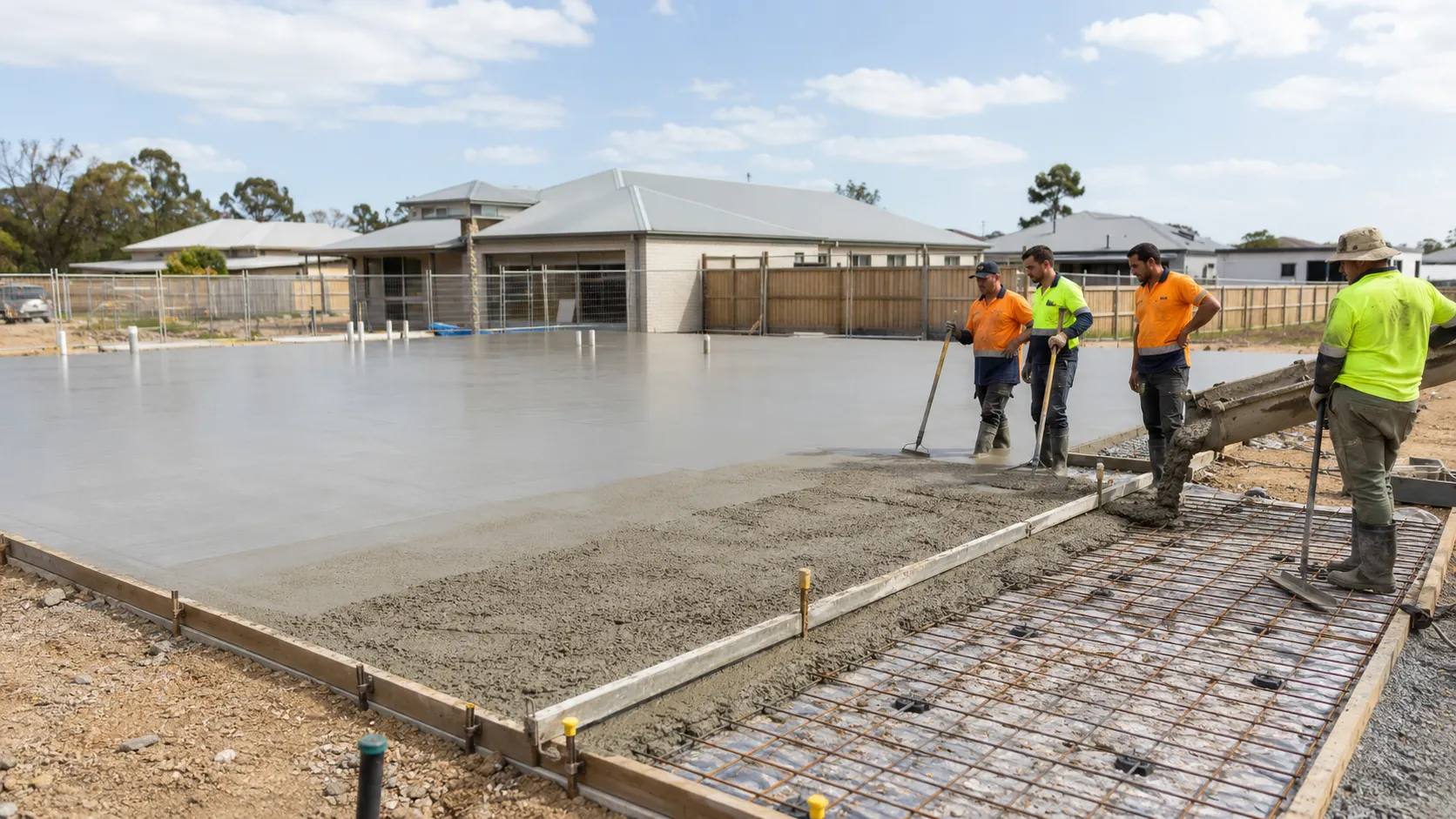
If the delay becomes significant:
Crews may attempt to slow the work or keep an exposed edge workable while waiting. However, adding excess water or repeatedly working the surface can create further finishing and durability problems.
Under-ordering is rarely intentional. It usually results from small measuring errors, changes to the design, uneven ground or incorrect assumptions about how much concrete the prepared area will consume.
The most common cause is inaccurate measurement.
Concrete is ordered in cubic metres, so errors in length, width or thickness can quickly affect the final quantity. Measuring a slab at 90 millimetres thick when it is actually designed at 100 millimetres will produce an incorrect result.
Other common calculation mistakes include:
A driveway or slab that is only slightly deeper than expected across a large area can require a significant amount of additional concrete.
For example, a slab measuring 10 metres long, 5 metres wide and 100 millimetres thick requires 5 cubic metres of concrete before any appropriate site allowance is added.
A theoretical volume calculation assumes the prepared area matches the specified dimensions exactly. Site conditions are rarely that precise.
Low sections in the base can consume more concrete before the finished level is reached. Small amounts may also be lost through spillage, pump priming, gaps in formwork or material left in equipment.
The required allowance depends on:
Rather than applying one percentage to every job, the appropriate allowance should be discussed with the concreter or supplier after the site has been measured and inspected.
Changes that appear minor can have a significant effect on concrete volume.
Common examples include:
The concrete quantity should be recalculated whenever the dimensions, depth or layout change. Agreeing to additional work on the day without updating the order can leave the final section of the pour incomplete.
Ordering the correct amount of concrete starts well before the truck arrives. The dimensions, base levels, formwork, access conditions and placement method should all be confirmed before the order is finalised.
All important measurements should be checked on site rather than relying solely on drawings. Completing accurate concrete volume calculations before confirming the order helps reduce the risk of both shortages and excessive waste.

For a rectangular slab, the basic calculation is:
Length × width × thickness = concrete volume
Measurements should be converted to metres before calculating cubic metres.
For example:
10 metres × 5 metres × 0.1 metres = 5 cubic metres
Irregular areas can be divided into smaller rectangles or triangles and calculated separately. The individual volumes can then be added together.
For footings and beams, check the width, depth and total length. Thickened edges, pads, steps and changes in excavation depth should also be included.
Measure the prepared base at several locations and account for genuine depth variations rather than assuming the entire slab is perfectly uniform. The required design thickness should not be reduced simply to make the ordered volume cover the area.
The base should be compacted, trimmed and checked for low areas before the final quantity is calculated.
Soft or uneven sections can consume more concrete than expected. Poorly compacted material may also settle under load, affecting the finished slab after the pour.
Formwork should be inspected for:
Gaps beneath the formwork can allow concrete to leak during placement, creating an unexpected shortage before the work is complete.
Access arrangements should be checked before delivery day. Identifying common concrete delivery issues before booking can prevent trucks from being delayed, repositioned or turned away.
If the truck cannot reach the intended discharge point, concrete may need to be pumped or moved by wheelbarrow. This can increase placement time, spillage and labour requirements.
Confirm:
A designated and contained washout area should be provided because washout water must not enter stormwater drains or nearby waterways.
SafeWork NSW advises that concrete placing equipment must be correctly sited, with consideration given to ground-bearing capacity, site slopes, outrigger deployment, overhead powerlines and appropriate exclusion zones.
The concrete quantity is only one part of the order. The specified concrete mix, strength grade, slump, aggregate size and any approved additives should also be confirmed.
The supplier should be given accurate information about:
Crews, tools and equipment should be ready before the first truck arrives. Delays at the start of the pour can reduce the available working time and affect the delivery sequence for later loads.
Even with careful planning, unexpected conditions can sometimes create a shortage. The way the interruption is handled can significantly affect the finished result.
As soon as a shortage becomes apparent, contact the supplier and confirm whether a top-up load can be dispatched.
Provide an accurate estimate of the remaining volume rather than guessing. The crew should also advise the supplier about the mix originally supplied so the additional load can match the project requirements as closely as possible.
The remaining concrete should not be stretched across a larger area by reducing the specified slab thickness.
Doing so can affect:
The structural and dimensional requirements of the slab should take priority over making the surface appear complete.
Adding water to the concrete to make it easier to spread or to increase the apparent volume can reduce strength and contribute to bleeding, segregation, dusting and surface defects.
Any adjustment to the mix should only be made in accordance with the supplier’s instructions and the project specification.
Where possible, the pour should stop at an approved or practical construction-joint location rather than at an arbitrary point.
The site supervisor, concreter or engineer should determine how the interruption should be managed, particularly for:
The concrete already placed should be properly consolidated, finished and protected while the next steps are arranged.
If the concrete begins to harden before the next load arrives, the restart area may require specific preparation.
Depending on the project, this may include:
The correct method depends on the type of element, the delay and the project specifications.
For structural work, record where the pour stopped, how long the delay lasted and what preparation was completed before work resumed.
Photographs, delivery dockets and site notes can help the builder, engineer or inspector assess the joint and confirm whether further action is required.
Ordering too little concrete is not a minor inconvenience. It can create unplanned joints, finishing defects, additional delivery charges, wasted labour and delays to other trades.
Most shortages can be avoided by checking dimensions on site, accounting for real base conditions, inspecting formwork, confirming access and discussing an appropriate ordering allowance with the concreter or supplier.
By working with Maitland Ready Mixed Concrete, builders and property owners can provide the project details needed to plan a reliable delivery. Confirming the correct mix, practical quantity, site access and delivery sequence before the pour helps protect the finished concrete and keep the project on schedule.
Call our friendly and highly experienced team today to get your concrete, sand, aggregate, and landscaping products.
-1.png)

