
Will New Concrete Match the Colour of My Existing Slab?
October 23, 2026
A path extension can make a garden easier to navigate, while a larger patio can create more room for outdoor dining and entertaining. However, when new concrete will sit besides an existing slab, there is one vital consideration to address before the pour: how closely can the colours match?
Matching new concrete to old one involves more than ordering the same strength grade. Ageing, material variations, finishing methods and curing conditions can affect the final appearance. In planning an outdoor project in Maitland or elsewhere in the Hunter Valley, knowing what influences colour can set realistic expectations and create a transition that complements the existing space.
Existing concrete has been exposed to weather, sunlight, foot traffic and maintenance over time. Even if the original mix was similar to the one selected for an extension, these changes can make the older surface look noticeably different from freshly poured concrete.
The final appearance also depends on the materials used and how the concrete is placed, finished and cured. Matching one specification does not automatically produce identical surfaces.
An existing path or patio may contain several shades of grey. Sections exposed to direct sunlight can look different from areas beneath a pergola, while garden edges may show soil stains and other discolouration. Regular foot traffic can also change the surface texture.
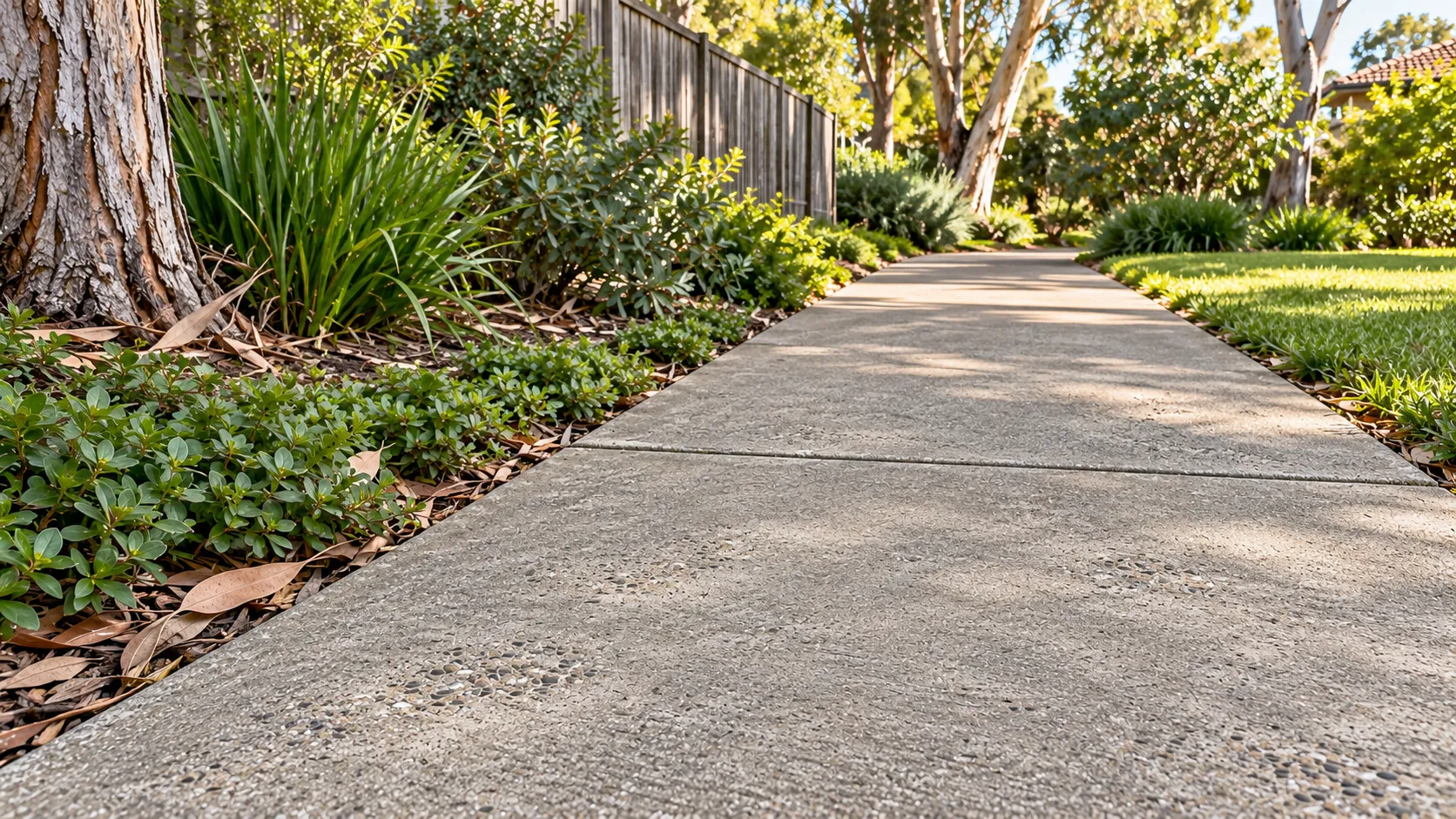
Weathering and surface wear may expose more aggregate, affecting the visible colour and how light reflects off the concrete. Dirt, organic staining and previous sealers can create further differences. Some sealers deepen the colour or add a sheen, while uneven wear can leave the surface looking inconsistent.
These changes mean the existing slab may no longer resemble its original appearance. For a patio extension, the sheltered area near the house could look quite different from the exposed outer edge.
Before discussing a colour match, identify the section of concrete that best represents the desired appearance. This gives the supplier and concreter a more useful reference than treating the entire weathered slab as one uniform colour.
Concrete contains materials such as cement, sand and aggregate, contributing to its base colour. Differences in their composition or source can affect the appearance of the finished surface. If the original mix specifications are unavailable, reproducing the same starting point becomes more difficult.
Strength grade describes a concrete's required compressive strength, not its colour. Two mixes ordered to the same strength grade can still look different once placed and cured.
Finishing methods also influence the result. Differences in surface texture, exposed aggregate and the amount of moisture brought to the surface during finishing can affect how the concrete looks. Curing conditions and subsequent weather exposure can contribute to further variation.
Using the same mix and finishing approach can establish consistency within the new section, but it cannot guarantee an exact match with an older slab. Discuss the specification and intended finish separately so everyone involved understands the expected result.
Careful comparisons can help narrow down the preferred appearance, although an exact match cannot always be achieved. Dry, mature concrete viewed under similar lighting conditions provides a more useful reference than freshly poured concrete or a surface that has recently been rained on.
Photographs, original project records and sample panels can help communicate colour preferences. Each has limitations, so they should be used to guide decisions rather than guarantee the final appearance.
Wet concrete generally appears darker than dry concrete. Comparing a damp existing slab with a new surface that has dried can create a misleading impression of how closely the colours match.
Freshly poured concrete is also an unreliable reference because its appearance changes as it dries and cures. Early colour differences may eventually become less noticeable, but this does not mean the surfaces will become identical.
For a more accurate comparison, inspect the existing slab when it is dry. Choose areas exposed to similar lighting and look at the colour, texture and sheen. A smooth surface can reflect light differently from a rougher one, even when both have a similar grey tone.
Take photographs of the entire path or patio, along with closer images of representative sections. Include areas that show the typical appearance rather than relying only on unusually stained or sheltered patches. Keep in mind that camera settings, lighting and screen displays can alter colours, so photographs are best used to explain preferences rather than as precise colour references.
A sample panel can help establish whether a lighter or darker tone, or a particular surface texture, would suit the existing outdoor area. However, its usefulness depends on how closely its materials, finish and conditions represent the proposed work.
A small sample made with different materials or under different curing conditions may not accurately predict the appearance of a larger slab. Its age and any applied sealer should also be considered when comparing colours.
Share photographs, available mix records and details of the existing finish with the concreter. When comparing a concrete supplier in Hunter Valley, ask which aspects of the proposed mix can be matched and which variations remain outside their control.
If the original specifications are unavailable, explain this before requesting a quote. That allows the project team to work from the existing slab's current appearance rather than relying on assumptions about how it was originally made.
A difference in colour does not automatically make a concrete extension look unfinished. A well-planned boundary can help the new section feel like a deliberate addition rather than an unsuccessful attempt to reproduce an ageing surface.
For a patio extension or garden path, consider the overall layout before focusing on the closest possible colour match. The boundary’s position and the relationship between the two surfaces can be just as important as their individual appearances.
Look for a natural point where the existing concrete and the extension can meet. On a garden path, this might be a turn or a point where the walkway connects to another outdoor area. For a patio, the existing slab could define the original entertaining space, while the extension creates a separate area for dining or relaxing.
Garden edges and other landscape features can also help establish a clear visual division. Aligning the transition with an existing feature can make the change appear intentional without adding unnecessary decorative details.
Consider how the boundary will look from the back door, garden and other frequently used viewpoints. A division that looks balanced from one angle may appear awkward from another if it crosses the main view of the patio.
For more ideas, explore these garden path and side-access ideas. Planning the transition as part of the layout can help the new concrete complement the surrounding space, even if its colour differs from the existing slab.
Trying to create an almost identical patch besides weathered concrete can draw attention to even small differences. A clearly defined extension may look more cohesive, provided its colour and texture work with the existing outdoor area.
A dramatic contrast is not necessary. A subtle difference in tone or finish can distinguish the new section while maintaining a consistent appearance. Reviewing concrete finish options for paths and patios can clarify the preferred look before the project begins.
Rather than attempting to reproduce every variation across the older slab, focus on achieving a consistent specification and finish throughout the new area. This gives the concreter a clearer objective and reduces the risk of inconsistent results within the extension itself.
The design of joints, connections and other structural details should be assessed by professionals. A visual boundary can improve the appearance of the finished project, but it must not replace the technical requirements for connecting or separating surfaces.
A successful project starts with a shared understanding of the desired appearance. Asking for the new concrete to look exactly the same as the old slab may leave too much room for different interpretations, particularly when the existing surface contains several shades or textures.
Explain the main priorities, provide available reference information and confirm which aspects of the project each professional will manage before committing to the work. Before engaging a concreter, check the concreting licence requirements that apply to the proposed work.
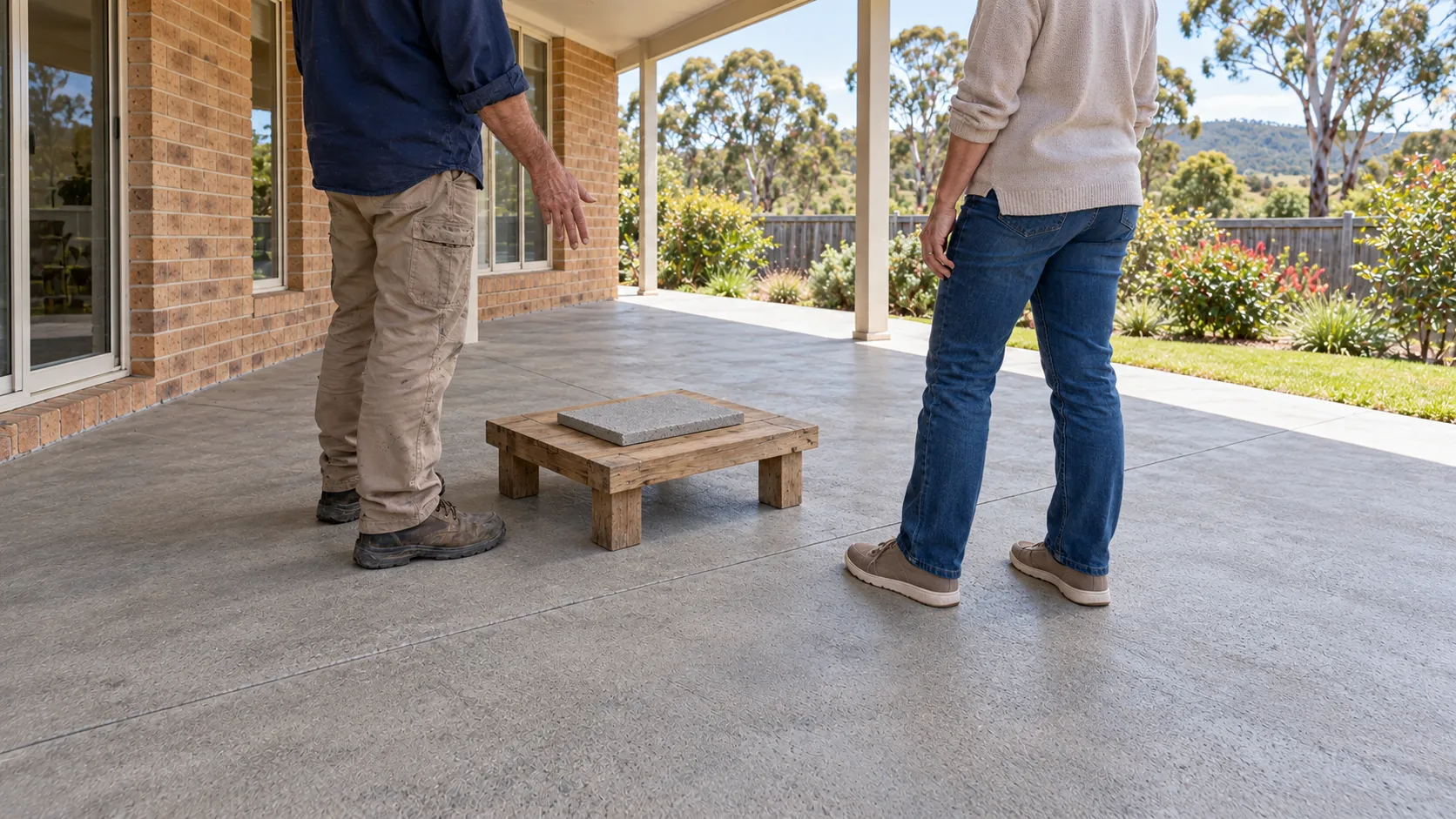
Decide whether the main priority is a similar grey tone, a comparable texture or a clearly defined new area. These objectives are related but not interchangeable. A similar surface texture does not guarantee a matching colour and two surfaces with similar colours can still look different because of their finish or sheen.
Point out the specific section of the existing slab that should guide the comparison. If a patio has sheltered and exposed areas, explain which one matters most rather than asking for a match to the entire surface.
Discuss the expected result if the new concrete remains visibly different after drying and curing. This is not about demanding an exact-match guarantee; it is about confirming that the proposed mix, finish and design approach are appropriate for the desired outcome.
When comparing suppliers and concreters, look for clear explanations of what can reasonably be achieved. A realistic assessment of colour variation is more useful than a confident promise that cannot be supported by the available specifications or samples.
The supplier can discuss available mixes, material specifications and ordering requirements. The concreter can assess the existing slab, recommend suitable finishing methods and manage placement and curing practices. Both need to understand the intended appearance, but their responsibilities differ.
Provide any original concrete records and show the existing slab to the concreter. Confirm that both parties understand the preferred colour direction, surface texture and whether a visible transition is acceptable.
Delivery arrangements and site preparation should also be coordinated with the placement plan. Review site preparation for ready-mixed concrete delivery before scheduling the pour.
If sealing or another surface treatment is proposed to reduce the visual difference, have the existing concrete assessed before proceeding. The condition of the surface, existing coatings and intended use of the area can affect whether a treatment is suitable.
Matching new concrete to an existing slab requires realistic expectations and careful planning. Differences can affect the final appearance, even when the new concrete is supplied to the same strength grade. Maitland Ready Mixed Concrete can assist with specifications and available mix options. Discussing the project requirements establishes a practical approach.
Call our friendly and highly experienced team today to get your concrete, sand, aggregate, and landscaping products.


